Srisail Shakti Peeth, Sylhet
Categories:
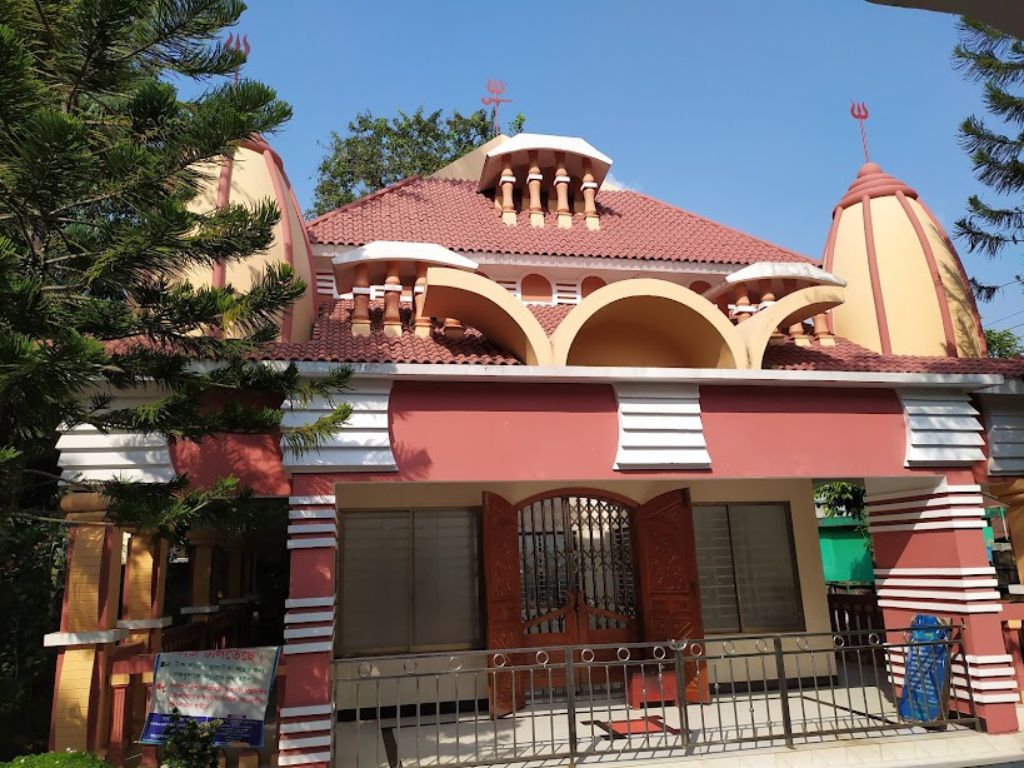
Srisail is a sacred Shakti Peeth located in Jainpur village of South Surma, about 3 km northeast of Sylhet city in Bangladesh. Here the neck (back portion of the throat) of Devi Sati is said to have fallen. The presiding deity is Devi Mahalakshmi, and the Bhairav is Sarbananda.
Shakti Peeth
Shakti Peethas are among the holiest pilgrimage sites in Hinduism. According to belief, various body parts of Devi Dakshayani Sati are enshrined at these locations. Though commonly 51 Shakti Peethas are mentioned, scriptures differ about the exact number and their locations. Peethanirnaya Tantra lists 51 Peethas. Shibcharita mentions 51 main Peethas and 26 subsidiary ones. Kubjika Tantra counts 42, while Jñanarnava Tantra lists 50. These Peethas are spread across the Indian subcontinent. In every Shakti Peeth, the Devi is worshipped along with a Bhairav.
Mythological Background
According to legend, in Satya Yuga, King Daksha arranged a grand yajna to take revenge on Mahadev. Daksha was angered because his daughter Sati married the ‘yogi’ Shiva against his wishes. Daksha invited almost all gods except Mahadev and Sati. Despite Shiva’s reluctance, Sati went to the ceremony with Shiva’s attendants.
Since she was not invited, Sati was insulted and ignored. Daksha even spoke ill of Mahadev. Unable to tolerate her husband being dishonored, Sati immolated herself through yogic fire.
Hearing this, a grief-stricken Shiva destroyed Daksha’s yajna and began the Tandava of destruction with Sati’s body on his shoulder. The universe was on the verge of collapsing. The gods pleaded for peace, and Vishnu used his Sudarshan Chakra to dismember Sati’s body. Her body parts fell across many places in the subcontinent, which then became holy Shakti Peethas.
History
It is believed that the fallen part rested on a stone, and this very stone was
worshipped since ancient times. The Peeth remained hidden for many years.
During the 12th–13th century, a road construction project was underway here. An
overseer named Debiprasad Das hired laborers for the work. While digging, a
black stone surfaced. It was impossible to move it. A laborer struck the stone
with a crowbar and split it.
At that moment, a young girl emerged from the nearby forest, slapped the laborer, and vanished instantly. That night, Debiprasad dreamt of Devi Mahalakshmi, who instructed him to establish her worship at that very spot.
Debiprasad arranged to build a temple with thousands of bricks.
But the Devi again appeared in his dream, saying: “I do not wish to remain
confined. Keep me in the open.” So he followed her command.
Bhairav Sarbananda was also unknown at first. A great saint, Brahmananda Giri,
came to Srihatta and attained siddhi in Devi’s worship. Through spiritual
insight, he discovered that Bhairav was on a small hill west of the Devi.
One night, he climbed the hill with disciples and pointed to the spot.
Unfortunately, in 1281 Bangabda, he passed away before Bhairav could be revealed. His disciple, Birajanath Nyayabagish—also a great saint—had a strange dream in 1286 Bangabda. He saw his guru on that hill saying, “Bhairav is here, I will reveal him.”
The next morning, two of his disciples arrived and said they had the same dream.
Realizing the divine sign, Birajanath and the disciples went to the hill and dug
the ground. A Shivalinga, along with the sacred Gauripatta, emerged.
Thus Bhairav Sarbananda manifested.
The Deity
According to Tantra:
“Greeba ppaat Srihatt’e sarva-siddhi pradaayinee.
Devi tatra Mahalakshmi, Sarbanandaścha Bhairava.”
Sati’s neck (back of the throat) fell here, making it known as “Greeba Mahapeeth.” Devi is worshipped as Mahalakshmi, and the Bhairav temple of Sarbananda is situated nearby in Gotatikar village.
Location on Google Maps
Source: Wikipedia
Date: 27.01.2022