Jessoreswari Shaktipeeth, Satkhira
Categories:
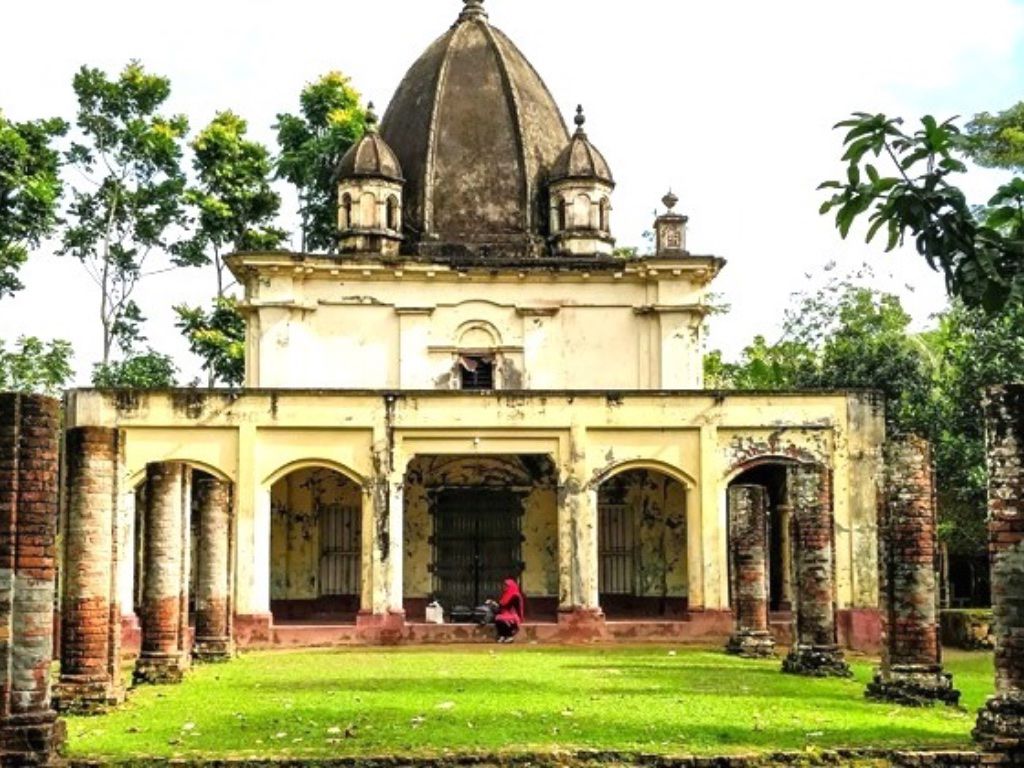
Jessoreswari Shaktipeeth stands at Ishwaripur in Shyamnagar, Satkhira.
The name means “Goddess of Jessore”. Here the palm or hand of Sati fell.
The presiding deity is Jessoreswari and the Bhairava is Chand.
Shaktipeeth
Shaktipeeths are among the holiest sites in Hinduism. According to belief,
different body parts of Goddess Dakshayani Sati lie enshrined in these sacred
spots.
Though commonly 51 Shaktipeeths are mentioned, scriptures differ about the
exact
number and location. Pithanirnaya Tantra lists 51. Shivacharita mentions 51
plus
26 subsidiary peethas. Kubjika Tantra lists 42, and Jnanarnava Tantra
mentions 50.
These shrines are scattered across the Indian subcontinent. In every
Shaktipeeth,
the Goddess is worshipped together with Bhairava.
Mythological Story
Legend says that in Satya Yuga, King Daksha—father-in-law of Shiva—held a
grand
yajna to insult Shiva. He was angry because his daughter Sati had married the
‘ascetic’ Shiva against his wishes. Daksha invited all gods except Shiva and
Sati.
Despite Shiva’s reluctance, Sati attended with his followers.
She was not treated with honor. Daksha openly insulted Shiva. Unable to bear
her
father’s humiliation of her husband, Sati gave up her life through yogic fire.
Hearing this, the grief-stricken Shiva destroyed the yajna and began his cosmic
dance
carrying Sati’s body. The world moved toward destruction. To save creation, the
gods
requested Vishnu to intervene. Vishnu then cut Sati’s body with the Sudarshan
Chakra.
Her limbs fell across many places of the subcontinent, which later became known
as
Shaktipeeths.
History
It is believed that a Brahmin named Anari built the original temple. He constructed 100 doorways in this shrine. However, the exact date of construction is unknown.
Later, during the reign of Lakshman Sen and Maharaja Pratapaditya, the temple was renovated. A story says that Pratapaditya’s general saw a beam of divine light fall on a stone shaped like a human palm. Pratapaditya then began worshipping the Goddess and built this Kali shrine.
The local zamindar donated nearly 200 bighas of land to the temple. But over time, influential land-grabbers forged documents and took control of the temple property.
The Idol
The Tantra Chudamani states:
‘In Jessore lies the hand-lotus of Sati. The Goddess is Jessoreswari, and the
Bhairava is Chand. Whoever worships here with devotion attains fulfilment.’
Only the face of the deity is visible above the altar. Her hands and feet remain unseen. The entire idol is covered with velvet.
Jessoreswari is also worshipped as per Tantric rituals. Every year the grand Shyama Puja is held here. The Goddess is considered very active and powerful. Thousands of devotees offer prayers and fulfil vows. A large homa yajna is performed. The idol is adorned with ornaments. A three-day fair is held outside the temple. Goats are sacrificed.
Near the main shrine stood a huge Natmandir (pavilion), from where devotees
could
view the Goddess’ face. It was built in the 13th century, possibly by Lakshman
Sen
or Pratapaditya. But its exact builder is unknown. After 1971, it collapsed.
Today only a few old pillars remain standing.
Once, a tall boundary wall surrounded the complex. Except for the main temple,
everything else has vanished over time. The old Naubatkhana is now in ruins.
Visit by the Prime Minister of India
On 27 March 2021, India’s Prime Minister Narendra Modi visited the Jessoreswari Kali Temple in Shyamnagar, Satkhira. Before the visit, the temple walls were painted and repaired. A long-damaged banyan area near the entrance was filled and a spacious courtyard was built with brick and stone.
Location on Google Maps
Source: Wikipedia
Date: 27.01.2022