Sitakunda Shakti Peeth, Chattogram
Categories:
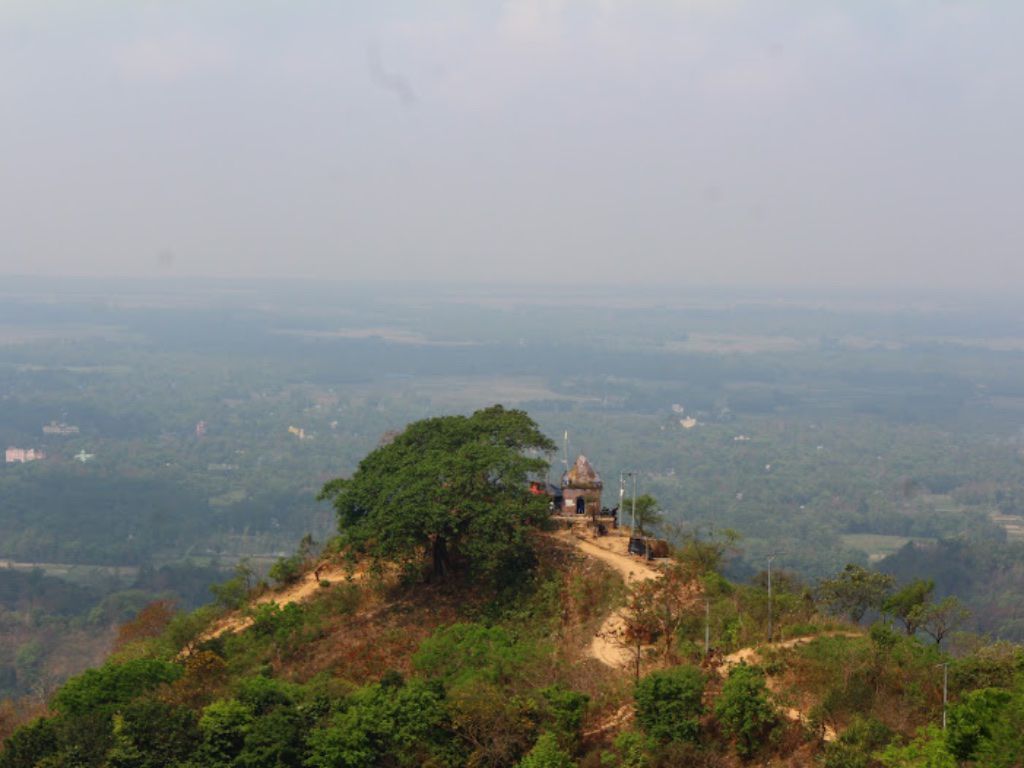
The Chandranath Temple atop Chandranath Hill near Sitakunda in Bangladesh is one of the most famous Shakti Peethas. The right hand of the Goddess is believed to have fallen at this site. The presiding deity here is Goddess Bhavani, and the guardian Bhairav is Chandrashekhar.
Shakti Peethas
Shakti Peethas are among the holiest pilgrimage sites in Hinduism. According to tradition, different parts of Goddess Dakshayani Sati’s body fell at various locations, which later became sacred Peethas. Although 51 Shakti Peethas are commonly mentioned, their exact number and locations vary across scriptures. The Peethanirnaya Tantra lists 51, while Shivcharita mentions 51 Peethas plus 26 sub-Peethas. The Kubjika Tantra refers to 42, and the Jnanarnava Tantra speaks of 50. These Peethas are spread across the Indian subcontinent, and in each Peeth, the Goddess resides alongside Bhairav.
Mythological Story
According to legend, in the Satya Yuga, King Daksha—father of Goddess Sati—held a grand yajna to take revenge on Lord Shiva. Daksha was enraged because Sati had married Shiva, a ‘yogi,’ against his wishes. He invited almost all gods and goddesses except Shiva and Sati. Despite Shiva’s reluctance, Sati attended the yajna with Shiva’s followers.
As she was not invited, she was humiliated at the ceremony. Daksha insulted Lord Shiva as well. Unable to bear her father’s disrespect toward her husband, Sati sacrificed herself through yogic fire.
Hearing this, the grief-stricken Shiva destroyed Daksha’s yajna and, carrying Sati’s lifeless body, began his cosmic dance of destruction. The universe was on the verge of collapse. The gods intervened, and Lord Vishnu used his Sudarshan Chakra to cut Sati’s body into pieces. These fragments fell at different places across the Indian subcontinent, forming the sacred Shakti Peethas.
History
According to the Sanskrit text Rajmala, around 1204 CE, King Bishwambhar Sur of the famous Adishur dynasty of Gaur attempted to visit the Chandranath Temple by river route. The poet Jayadev Goswami, author of Nigamakalptaru, is believed to have lived near Chandranath for a long time. King Dhanyamanikya of Tripura, a devoted Shaivite, used to send offerings to Chandranath Temple and even attempted to move a Shiva idol from here to his own kingdom.
The Temple and Surroundings
Sitakunda is known for its breathtaking natural beauty. It is considered a major pilgrimage site for Hindus. The Chandranath Temple stands on the highest peak of the region. Around it are many religious and cultural sites: Barabazar Puja Mandap, Kramdeshwari Kali Temple, Bholananda Giri Sevashram, Kachari Bari, Shani Temple, Premtala, Loknath Brahmachari Sevashram, Ramakrishna Sevashram, Girish Dharmashala, Dol Chattar, Nani Gopal Saha Pilgrims Inn, Mohanta Ashram, Vivekananda Smriti Panchavati, Jagannath Ashram, Sri Krishna Temple, Shankarmath and Ashram, Vishwanath Temple, Mahashmashan Bhavani Temple, Swayambhunath Temple, Gayakshetra, Jagannath Temple, Virupaksha Temple, Patalpuri, Annapurna Temple, and more. The old name of the Chandranath Temple was “Sitar Kund Temple.”
Every year, a grand festival is held here on Shivaratri or Shiv Chaturdashi. During this time, Sitakunda hosts a massive fair. Hindu residents of the area also organize a large fair in the month of Falgun (February–March). This event, known as the Shiv Chaturdashi Mela, attracts thousands of devotees and saints from Bangladesh and abroad. Nearly 1–2 million pilgrims visit the site every year.
Location on Google Maps
Source: Wikipedia
Date: 27.01.2022