Sugandha Shaktipeeth, Barishal
Categories:
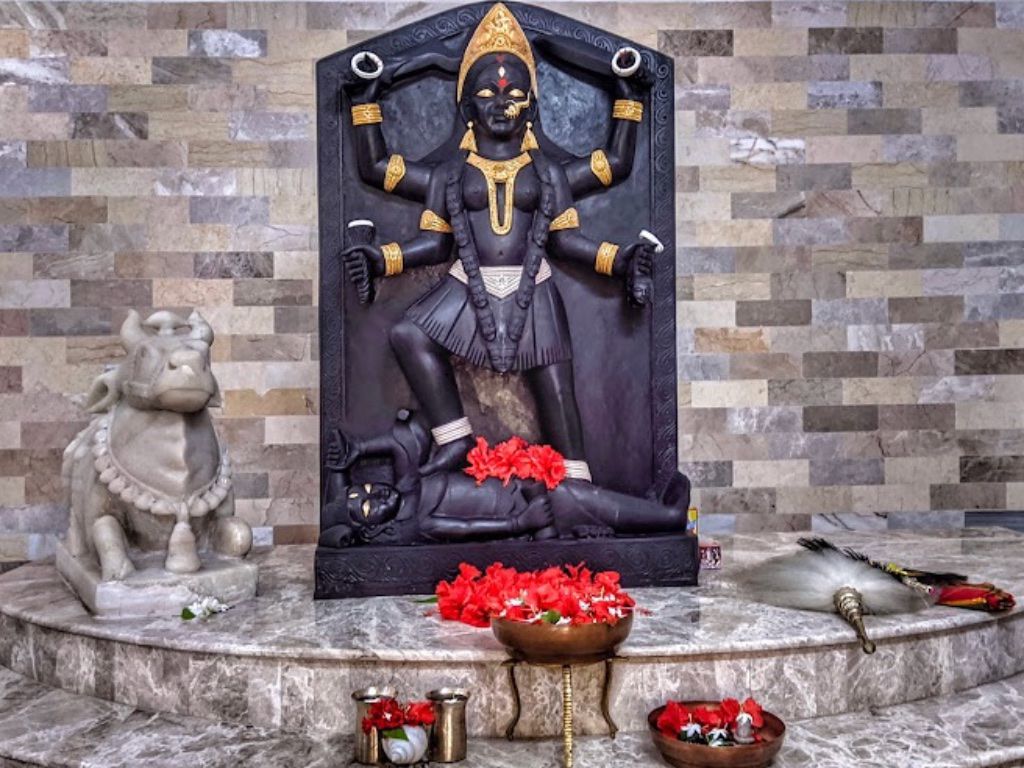
Sugandha Shaktipeeth is located in Shikarpur village, about 10 miles north of Barishal, Bangladesh. It is believed that Devi Sati’s nose fell at this site. The presiding deities are Devi Sunanda and Bhairav Tryambak. The temple of Bhairav Tryambak stands in Ponabaliya, 5 miles south of Jhalokathi.
Shaktipeeth
Shaktipeeths are among the holiest pilgrimage sites in Hinduism. According to traditional belief, different parts of Devi Dakshayani Sati’s body fell at these sacred locations. Although 51 Shaktipeeths are commonly mentioned, the exact number varies across scriptures. According to Pithanirnaya Tantra, the number is 51. The Shivacharita text mentions 51 Shaktipeeths along with 26 Upapeethas. The Kubjika Tantra lists 42, while the Jnanaarnava Tantra notes 50.
These Shaktipeeths are spread across the Indian subcontinent. In every Peeth, Devi Shakti resides alongside a form of Bhairava.
Mythological Story
According to legend, in Satya Yuga, King Daksha—father of Devi Sati—arranged a grand yagna with the intention of insulting Lord Shiva. Daksha was furious because his daughter had married Shiva, a ‘yogi,’ against his wishes. He invited almost all gods and goddesses except Shiva and Sati. Despite Shiva’s reluctance, Sati went to the ceremony with Shiva’s attendants.
Since she was uninvited, Sati was not treated with respect. Daksha even insulted Lord Shiva publicly. Unable to bear her father’s disrespect towards her husband, Sati immolated herself through yogic power.
Hearing this, a grieving and enraged Shiva destroyed Daksha’s yagna and began the Tandava—the cosmic dance of destruction—carrying Sati’s lifeless body. The world started moving toward devastation. To stop this, the gods pleaded with Vishnu, who used his Sudarshan Chakra to cut Sati’s body into pieces. The body parts fell across various regions of the Indian subcontinent, and those places became known as the sacred Shaktipeeths.
History
In ancient times, the holy Sugandha River flowed past Ponabaliya and Samrail in riverine Bangladesh. Over the years, the river lost its depth and flow, becoming a narrow stream known today as the Sonda. On the eastern bank lies the Devi Peeth, and on the western bank stands the temple of Bhairav Tryambakeshwar.
The region was once dense forest. People feared to enter even during the day. During that time, a wealthy zamindar named Shriram Ray of Shikarpur saw Lord Shiva in a dream commanding him to seek Him. The next morning, Ray went into the forest with many people to search for the divine presence.
Some cowherd boys who grazed cattle there knew of a mysterious mound. They told him a story:
Their cows had stopped giving milk as before. The owners suspected the cowherds of stealing milk. Determined to catch them red-handed, one owner followed them into the forest. Hidden behind trees, he saw the cows walk to a small mound and spontaneously let milk flow from their udders onto it. Curious and confused, he wondered what the mound contained. He gathered dry wood and set the mound on fire. As flames rose, he saw a dark- complexioned girl run from the mound into a nearby waterbody.
Hearing this account, Shriram Ray ordered excavation of the mound. As digging began, a Shiva-linga emerged. Ray intended to install it in his private temple, but no matter how many men tried, they could not move the linga. That night, Lord Shiva again appeared in Ray’s dream and said, “Establish Me right there. Also remember—there should be no covering over My abode.” Ray obeyed and arranged for daily worship at that spot.
Another incident occurred: A devout Brahmin named Panchanan Chakrabarti lived in Shikarpur. He was pious, honest, and kind-hearted. One night, Goddess Kali appeared to him in a dream and said, “I dwell in the womb of the Sugandha River in stone form. Bring Me out and establish My worship.” Chakrabarti followed the instructions, retrieved the stone idol, and initiated daily worship. Villagers came forward to offer what little they could for the service of the Mother.
Idol
The Annada Mangal by poet Bharatchandra states:
“Sugandhaye nasika porilo chakrahata.
Tryambak Bhairav tahe Sunanda debata.”
Sadly, the ancient idol was stolen. The exact location of Devi Sati’s fossilized body part at this site is no longer known. Today, the temple houses an image of Goddess Ugratara, worshipped as Devi Sugandha. She holds a sword, khatvanga, blue lotus, and a skull-garland. Above Her head stand Kartikeya, Brahma, Vishnu, Shiva, and Ganesha. The idol follows the iconography of Buddhist Tantric Ugratara.
The original ancient temple of Sugandha Shaktipeeth no longer exists. The current shrine is a newly built structure.
Worship here follows a specific Tantric method rooted in Buddhist Tara traditions.
Google Maps Location
Source: Wikipedia
Date: 27.01.2022