This blog section highlights key topics related to Hindu culture, heritage preservation, and social reform. Regular posts are published here on subjects such as the protection of temple–ashram heritage and Debottor properties, festival traditions, community leadership development, social awareness, volunteer work, and various organizational activities. It serves as a knowledge-based platform to strengthen and organize our history, identity, and collective power.
This is the multi-page printable view of this section. Click here to print.
Hindu Culture, Heritage Preservation & Social Reform
1 - Shakti Peethas: Worship of Divine Energy & Sacred Pilgrimage
Shakti Peethas: Worship of Divine Energy & Sacred Pilgrimage
The core centers of Shakti worship in Hinduism are the Shakti Peethas.
These sacred sites—believed to be where parts of Devi Sati’s body fell or where
divine energy manifested—are revered as places of deep faith, spiritual
practice, and inner awakening.
In this section, we present a series of articles exploring the history, mythology, religious significance, travel routes, and nearby attractions of various Shakti Peethas across Bangladesh.
1.1 - Jessoreswari Shaktipeeth, Satkhira
Jessoreswari Shaktipeeth is located at Ishwaripur village in Shyamnagar, Satkhira. The name Jessoreswari means “Goddess of Jessore”. Here the palm or hand-lotus of Sati is believed to have fallen. The presiding Goddess is Jessoreswari and the Bhairava is Chand.
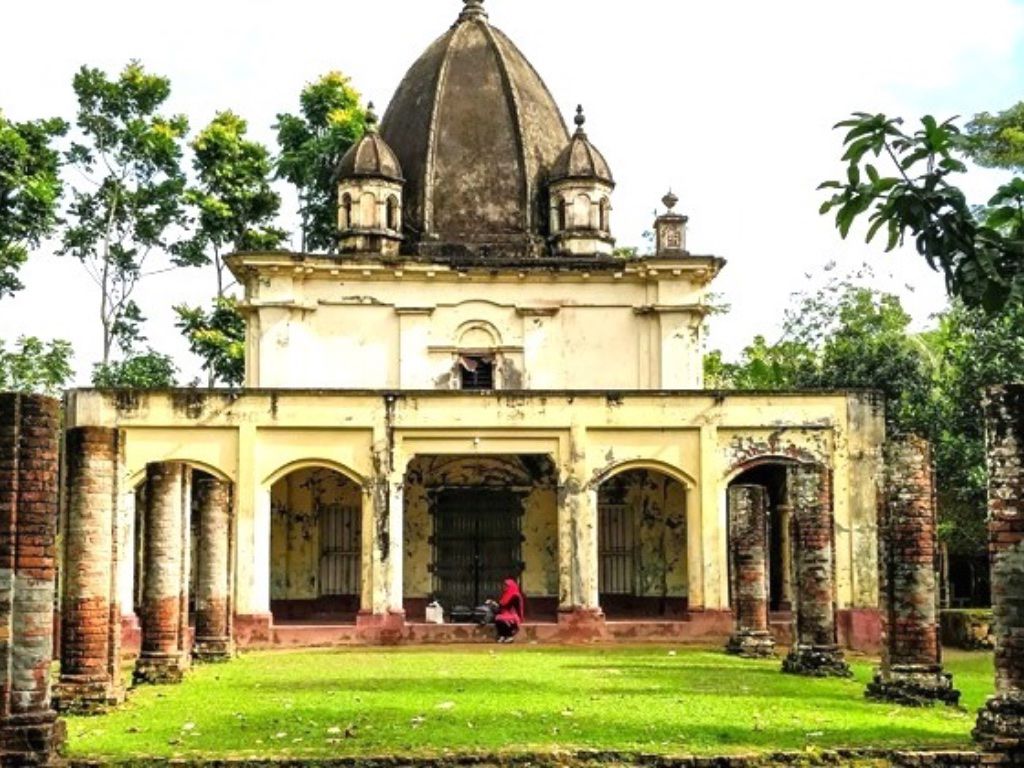
Jessoreswari Shaktipeeth stands at Ishwaripur in Shyamnagar, Satkhira.
The name means “Goddess of Jessore”. Here the palm or hand of Sati fell.
The presiding deity is Jessoreswari and the Bhairava is Chand.
Shaktipeeth
Shaktipeeths are among the holiest sites in Hinduism. According to belief,
different body parts of Goddess Dakshayani Sati lie enshrined in these sacred
spots.
Though commonly 51 Shaktipeeths are mentioned, scriptures differ about the
exact
number and location. Pithanirnaya Tantra lists 51. Shivacharita mentions 51
plus
26 subsidiary peethas. Kubjika Tantra lists 42, and Jnanarnava Tantra
mentions 50.
These shrines are scattered across the Indian subcontinent. In every
Shaktipeeth,
the Goddess is worshipped together with Bhairava.
Mythological Story
Legend says that in Satya Yuga, King Daksha—father-in-law of Shiva—held a
grand
yajna to insult Shiva. He was angry because his daughter Sati had married the
‘ascetic’ Shiva against his wishes. Daksha invited all gods except Shiva and
Sati.
Despite Shiva’s reluctance, Sati attended with his followers.
She was not treated with honor. Daksha openly insulted Shiva. Unable to bear
her
father’s humiliation of her husband, Sati gave up her life through yogic fire.
Hearing this, the grief-stricken Shiva destroyed the yajna and began his cosmic
dance
carrying Sati’s body. The world moved toward destruction. To save creation, the
gods
requested Vishnu to intervene. Vishnu then cut Sati’s body with the Sudarshan
Chakra.
Her limbs fell across many places of the subcontinent, which later became known
as
Shaktipeeths.
History
It is believed that a Brahmin named Anari built the original temple. He constructed 100 doorways in this shrine. However, the exact date of construction is unknown.
Later, during the reign of Lakshman Sen and Maharaja Pratapaditya, the temple was renovated. A story says that Pratapaditya’s general saw a beam of divine light fall on a stone shaped like a human palm. Pratapaditya then began worshipping the Goddess and built this Kali shrine.
The local zamindar donated nearly 200 bighas of land to the temple. But over time, influential land-grabbers forged documents and took control of the temple property.
The Idol
The Tantra Chudamani states:
‘In Jessore lies the hand-lotus of Sati. The Goddess is Jessoreswari, and the
Bhairava is Chand. Whoever worships here with devotion attains fulfilment.’
Only the face of the deity is visible above the altar. Her hands and feet remain unseen. The entire idol is covered with velvet.
Jessoreswari is also worshipped as per Tantric rituals. Every year the grand Shyama Puja is held here. The Goddess is considered very active and powerful. Thousands of devotees offer prayers and fulfil vows. A large homa yajna is performed. The idol is adorned with ornaments. A three-day fair is held outside the temple. Goats are sacrificed.
Near the main shrine stood a huge Natmandir (pavilion), from where devotees
could
view the Goddess’ face. It was built in the 13th century, possibly by Lakshman
Sen
or Pratapaditya. But its exact builder is unknown. After 1971, it collapsed.
Today only a few old pillars remain standing.
Once, a tall boundary wall surrounded the complex. Except for the main temple,
everything else has vanished over time. The old Naubatkhana is now in ruins.
Visit by the Prime Minister of India
On 27 March 2021, India’s Prime Minister Narendra Modi visited the Jessoreswari Kali Temple in Shyamnagar, Satkhira. Before the visit, the temple walls were painted and repaired. A long-damaged banyan area near the entrance was filled and a spacious courtyard was built with brick and stone.
Location on Google Maps
Source: Wikipedia
Date: 27.01.2022
1.2 - Srisail Shakti Peeth, Sylhet
Srisail is a Shakti Peeth located in Jainpur village of South Surma, about 3 km northeast of Sylhet city in Bangladesh. Here the neck (back portion of the throat) of Devi Sati is believed to have fallen. The presiding deity is Devi Mahalakshmi, and the accompanying Bhairav is Sarbananda.
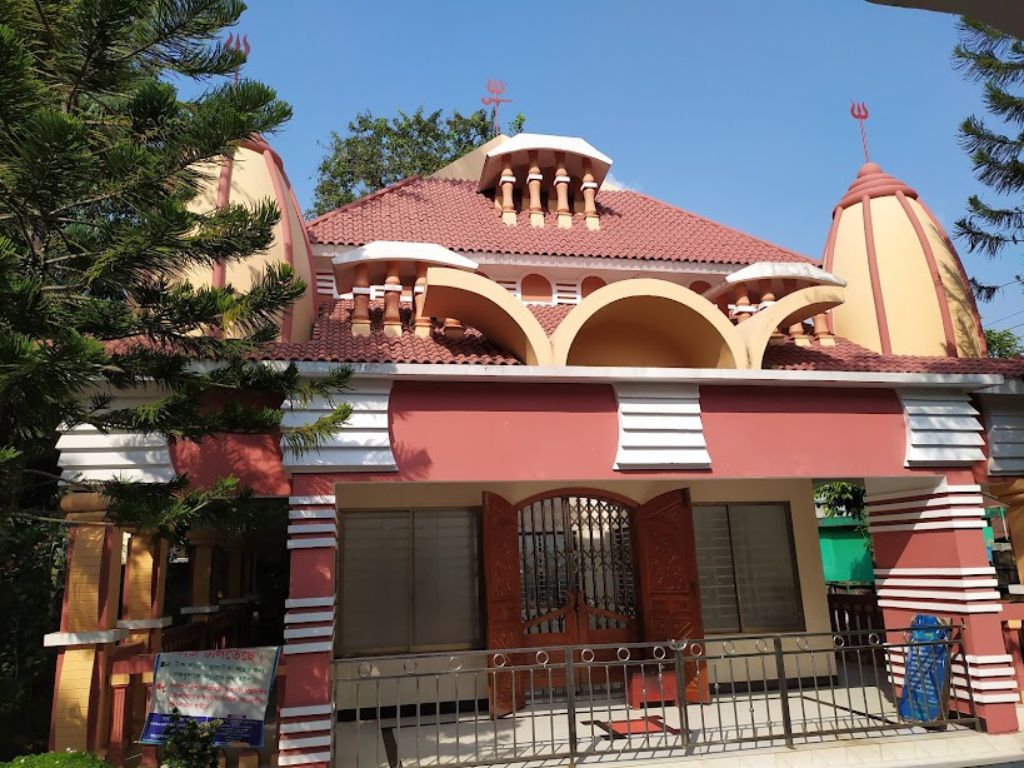
Srisail is a sacred Shakti Peeth located in Jainpur village of South Surma, about 3 km northeast of Sylhet city in Bangladesh. Here the neck (back portion of the throat) of Devi Sati is said to have fallen. The presiding deity is Devi Mahalakshmi, and the Bhairav is Sarbananda.
Shakti Peeth
Shakti Peethas are among the holiest pilgrimage sites in Hinduism. According to belief, various body parts of Devi Dakshayani Sati are enshrined at these locations. Though commonly 51 Shakti Peethas are mentioned, scriptures differ about the exact number and their locations. Peethanirnaya Tantra lists 51 Peethas. Shibcharita mentions 51 main Peethas and 26 subsidiary ones. Kubjika Tantra counts 42, while Jñanarnava Tantra lists 50. These Peethas are spread across the Indian subcontinent. In every Shakti Peeth, the Devi is worshipped along with a Bhairav.
Mythological Background
According to legend, in Satya Yuga, King Daksha arranged a grand yajna to take revenge on Mahadev. Daksha was angered because his daughter Sati married the ‘yogi’ Shiva against his wishes. Daksha invited almost all gods except Mahadev and Sati. Despite Shiva’s reluctance, Sati went to the ceremony with Shiva’s attendants.
Since she was not invited, Sati was insulted and ignored. Daksha even spoke ill of Mahadev. Unable to tolerate her husband being dishonored, Sati immolated herself through yogic fire.
Hearing this, a grief-stricken Shiva destroyed Daksha’s yajna and began the Tandava of destruction with Sati’s body on his shoulder. The universe was on the verge of collapsing. The gods pleaded for peace, and Vishnu used his Sudarshan Chakra to dismember Sati’s body. Her body parts fell across many places in the subcontinent, which then became holy Shakti Peethas.
History
It is believed that the fallen part rested on a stone, and this very stone was
worshipped since ancient times. The Peeth remained hidden for many years.
During the 12th–13th century, a road construction project was underway here. An
overseer named Debiprasad Das hired laborers for the work. While digging, a
black stone surfaced. It was impossible to move it. A laborer struck the stone
with a crowbar and split it.
At that moment, a young girl emerged from the nearby forest, slapped the laborer, and vanished instantly. That night, Debiprasad dreamt of Devi Mahalakshmi, who instructed him to establish her worship at that very spot.
Debiprasad arranged to build a temple with thousands of bricks.
But the Devi again appeared in his dream, saying: “I do not wish to remain
confined. Keep me in the open.” So he followed her command.
Bhairav Sarbananda was also unknown at first. A great saint, Brahmananda Giri,
came to Srihatta and attained siddhi in Devi’s worship. Through spiritual
insight, he discovered that Bhairav was on a small hill west of the Devi.
One night, he climbed the hill with disciples and pointed to the spot.
Unfortunately, in 1281 Bangabda, he passed away before Bhairav could be revealed. His disciple, Birajanath Nyayabagish—also a great saint—had a strange dream in 1286 Bangabda. He saw his guru on that hill saying, “Bhairav is here, I will reveal him.”
The next morning, two of his disciples arrived and said they had the same dream.
Realizing the divine sign, Birajanath and the disciples went to the hill and dug
the ground. A Shivalinga, along with the sacred Gauripatta, emerged.
Thus Bhairav Sarbananda manifested.
The Deity
According to Tantra:
“Greeba ppaat Srihatt’e sarva-siddhi pradaayinee.
Devi tatra Mahalakshmi, Sarbanandaścha Bhairava.”
Sati’s neck (back of the throat) fell here, making it known as “Greeba Mahapeeth.” Devi is worshipped as Mahalakshmi, and the Bhairav temple of Sarbananda is situated nearby in Gotatikar village.
Location on Google Maps
Source: Wikipedia
Date: 27.01.2022
1.3 - Sugandha Shaktipeeth, Barishal
Sugandha Shaktipeeth is located in Shikarpur village, 10 miles north of Barishal, Bangladesh. It is believed that Devi Sati’s nose fell here. The presiding deities are Devi Sunanda and Bhairav Tryambak. The temple of Bhairav Tryambak is situated in Ponabaliya, 5 miles south of Jhalokathi.
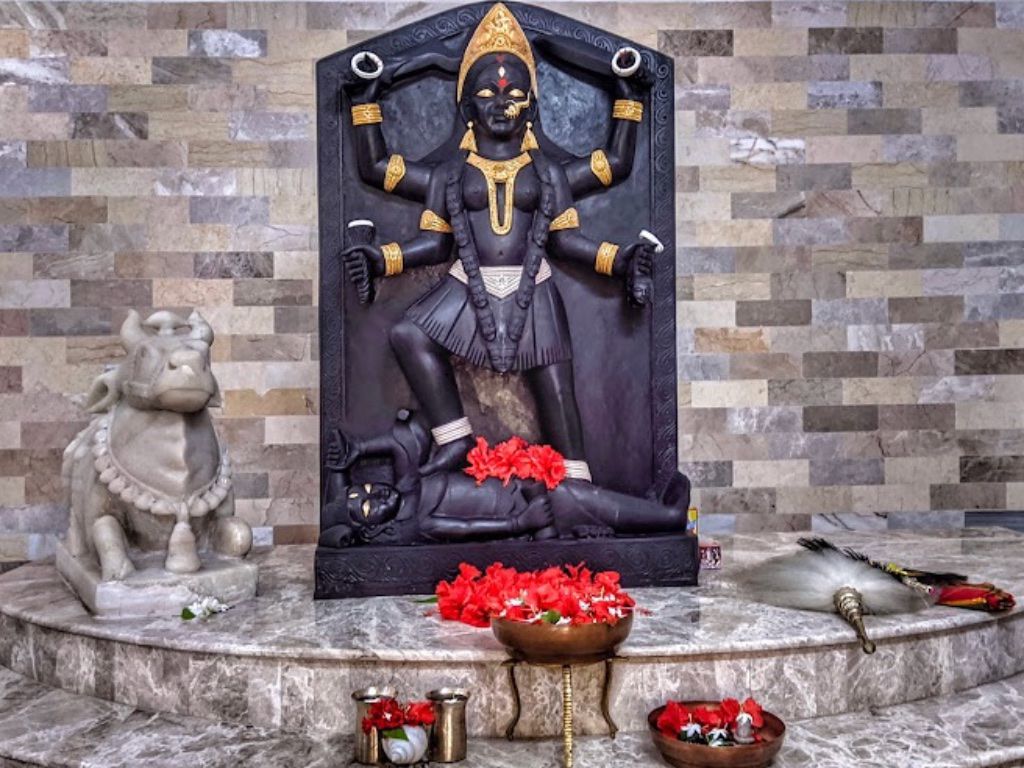
Sugandha Shaktipeeth is located in Shikarpur village, about 10 miles north of Barishal, Bangladesh. It is believed that Devi Sati’s nose fell at this site. The presiding deities are Devi Sunanda and Bhairav Tryambak. The temple of Bhairav Tryambak stands in Ponabaliya, 5 miles south of Jhalokathi.
Shaktipeeth
Shaktipeeths are among the holiest pilgrimage sites in Hinduism. According to traditional belief, different parts of Devi Dakshayani Sati’s body fell at these sacred locations. Although 51 Shaktipeeths are commonly mentioned, the exact number varies across scriptures. According to Pithanirnaya Tantra, the number is 51. The Shivacharita text mentions 51 Shaktipeeths along with 26 Upapeethas. The Kubjika Tantra lists 42, while the Jnanaarnava Tantra notes 50.
These Shaktipeeths are spread across the Indian subcontinent. In every Peeth, Devi Shakti resides alongside a form of Bhairava.
Mythological Story
According to legend, in Satya Yuga, King Daksha—father of Devi Sati—arranged a grand yagna with the intention of insulting Lord Shiva. Daksha was furious because his daughter had married Shiva, a ‘yogi,’ against his wishes. He invited almost all gods and goddesses except Shiva and Sati. Despite Shiva’s reluctance, Sati went to the ceremony with Shiva’s attendants.
Since she was uninvited, Sati was not treated with respect. Daksha even insulted Lord Shiva publicly. Unable to bear her father’s disrespect towards her husband, Sati immolated herself through yogic power.
Hearing this, a grieving and enraged Shiva destroyed Daksha’s yagna and began the Tandava—the cosmic dance of destruction—carrying Sati’s lifeless body. The world started moving toward devastation. To stop this, the gods pleaded with Vishnu, who used his Sudarshan Chakra to cut Sati’s body into pieces. The body parts fell across various regions of the Indian subcontinent, and those places became known as the sacred Shaktipeeths.
History
In ancient times, the holy Sugandha River flowed past Ponabaliya and Samrail in riverine Bangladesh. Over the years, the river lost its depth and flow, becoming a narrow stream known today as the Sonda. On the eastern bank lies the Devi Peeth, and on the western bank stands the temple of Bhairav Tryambakeshwar.
The region was once dense forest. People feared to enter even during the day. During that time, a wealthy zamindar named Shriram Ray of Shikarpur saw Lord Shiva in a dream commanding him to seek Him. The next morning, Ray went into the forest with many people to search for the divine presence.
Some cowherd boys who grazed cattle there knew of a mysterious mound. They told him a story:
Their cows had stopped giving milk as before. The owners suspected the cowherds of stealing milk. Determined to catch them red-handed, one owner followed them into the forest. Hidden behind trees, he saw the cows walk to a small mound and spontaneously let milk flow from their udders onto it. Curious and confused, he wondered what the mound contained. He gathered dry wood and set the mound on fire. As flames rose, he saw a dark- complexioned girl run from the mound into a nearby waterbody.
Hearing this account, Shriram Ray ordered excavation of the mound. As digging began, a Shiva-linga emerged. Ray intended to install it in his private temple, but no matter how many men tried, they could not move the linga. That night, Lord Shiva again appeared in Ray’s dream and said, “Establish Me right there. Also remember—there should be no covering over My abode.” Ray obeyed and arranged for daily worship at that spot.
Another incident occurred: A devout Brahmin named Panchanan Chakrabarti lived in Shikarpur. He was pious, honest, and kind-hearted. One night, Goddess Kali appeared to him in a dream and said, “I dwell in the womb of the Sugandha River in stone form. Bring Me out and establish My worship.” Chakrabarti followed the instructions, retrieved the stone idol, and initiated daily worship. Villagers came forward to offer what little they could for the service of the Mother.
Idol
The Annada Mangal by poet Bharatchandra states:
“Sugandhaye nasika porilo chakrahata.
Tryambak Bhairav tahe Sunanda debata.”
Sadly, the ancient idol was stolen. The exact location of Devi Sati’s fossilized body part at this site is no longer known. Today, the temple houses an image of Goddess Ugratara, worshipped as Devi Sugandha. She holds a sword, khatvanga, blue lotus, and a skull-garland. Above Her head stand Kartikeya, Brahma, Vishnu, Shiva, and Ganesha. The idol follows the iconography of Buddhist Tantric Ugratara.
The original ancient temple of Sugandha Shaktipeeth no longer exists. The current shrine is a newly built structure.
Worship here follows a specific Tantric method rooted in Buddhist Tara traditions.
Google Maps Location
Source: Wikipedia
Date: 27.01.2022
1.4 - Bhabanipur Shaktipeeth, Bogura
Bhabanipur Shaktipeeth, one of the 51 sacred sites of Devi Sati, is located on the banks of the Karatoa River in Sherpur, Bogura, Bangladesh. It is believed that Sati’s left anklet fell here. The Goddess is worshipped as Aparna, and the Bhairava here is Bamesh (Baman).
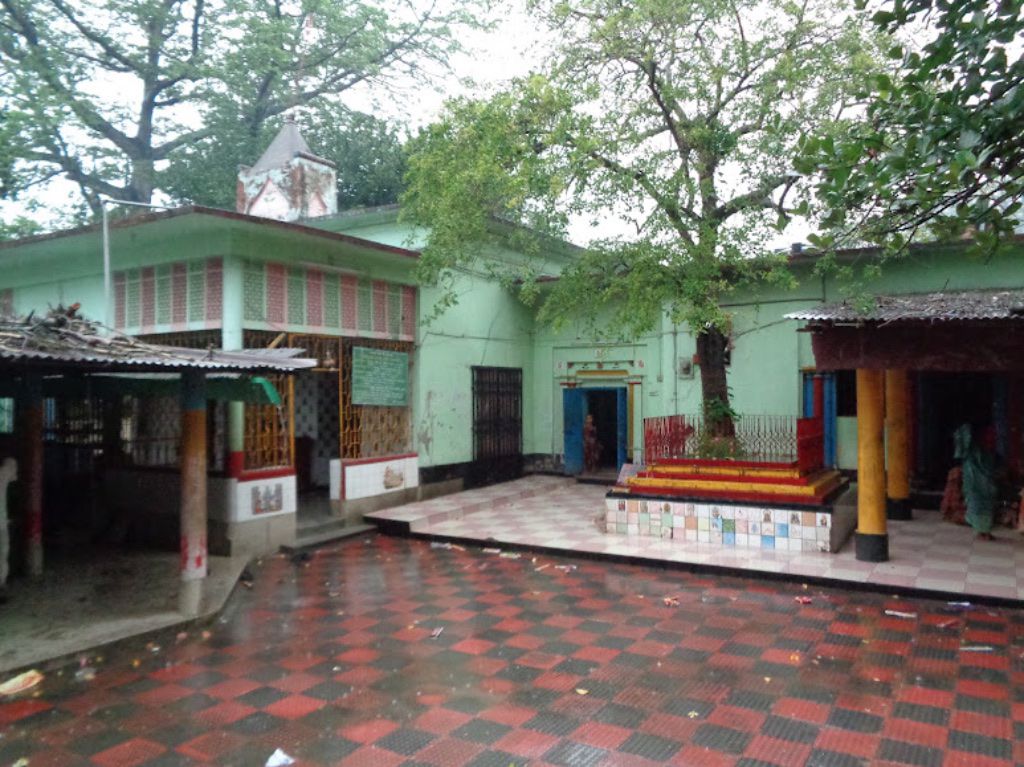
Bhabanipur Shaktipeeth, one of the 51 sacred sites of Devi Tara, stands on the banks of the Karatoa River in Sherpur, Bogura. It is believed that Sati’s left anklet fell at this holy spot. The Goddess is known as Aparna, and the Bhairava here is Bamesh (Baman).
Shaktipeeth
Shaktipeeths are among the holiest pilgrimage destinations in Hinduism.
According to tradition, different parts of Devi Dakshayani Sati’s body
manifested at these sacred locations. Though 51 Shaktipeeths are most commonly
mentioned, the number and locations vary across scriptures. Pithanirnaya
Tantra lists 51.
Shivacharita mentions 51 Shaktipeeths and 26 Upapeethas. Kubjika Tantra
mentions 42, while Jnanaarnava Tantra records 50. These holy sites are spread
across the Indian subcontinent.
In every Shaktipeeth, the Goddess resides with a form of Bhairava.
Mythological Story
According to legend, in Satya Yuga, King Daksha arranged a grand yagna to insult
Lord Shiva. Daksha was furious because his daughter Sati had married Shiva, a
‘yogi,’ against his wishes. He invited almost all gods except Shiva and Sati.
Despite Shiva’s reluctance, Sati attended the ceremony with Shiva’s attendants.
As she was uninvited, Sati was not treated with honor. Daksha even publicly insulted Shiva. Unable to bear her father’s disrespect, Sati immolated herself through yogic power.
Hearing this, the grief-stricken Shiva destroyed Daksha’s yagna and began the fearsome cosmic dance while carrying Sati’s body. Creation moved toward destruction. The gods appealed to Vishnu, who used his Sudarshan Chakra to cut Sati’s body into pieces. These body parts fell in many places across the subcontinent, becoming sacred Shaktipeeths.
History
It is said that long ago, a conch-maker was walking past a pond near the deep forest beside the Bhabanipur temple. A little girl, wearing vermilion on her forehead, approached him and claimed to be the princess of Natore Palace.
She bought a pair of conch bangles and told the conch-maker to collect the price from a basket kept in a particular spot in the palace. Touched by her gentle request, the conch-maker gave her the bangles.
Hearing the story, the queen of Natore went to the mentioned spot with her attendants and the conch-maker. Moved by the prayer of the conch-maker, Mother Bhavani revealed her divine presence by lifting her conch bangles from the sacred pond. Everyone present was astonished, and the glory of Mother Bhavani (Mother Tara) spread across the region.
The Natore royal family later renovated the pond, which is still known as the ‘Shankha-Pukur.’ Pilgrims bathe here during festivals.
Idol
Tantrachudamani states: “On the banks of the Karatoa, in the left ear dwells Baman Bhairava. The Goddess Aparna resides here in her fierce form.”
The presiding deities of this Shaktipeeth are Devi Aparna and Bhairava Bamesh (Baman).
The temple complex covers four acres (12 bighas) of land. It includes the main temple, Belbaran Tala, four Shiva temples, the Patal Bhairava Shiva temple, Gopal temple, Basudev temple, and the Nat-mandir/Atchala. There is also a service courtyard, the sacred Shankha Pond, two bathing ghats, four Shiva temples outside the boundary wall, and a Panchamunda seat.
There are daily rituals such as morning and mid-day offerings, noon worship, evening aarti, and prasadam distribution. Devotees may offer sweets or food and later receive prasadam. Major festivals include Maghi Purnima (Magh–Falgun), Ram Navami (Chaitra–Baisakh), Sharadiya Durga Puja, Dipanwita Kali Puja, and Nabanna (as per the Agrahayan tithi).
Temple Administration
During the era of East Pakistan, misuse of the Enemy Property Act and Debottar (Endowment) laws caused much of Mother Bhavani’s land—originally donated by the Queen of Natore—to be illegally seized. Many properties still need to be recovered.
Journalist Dipankar Chakraborty was murdered on 02/10/2004 during the BNP–Jamaat regime for raising his voice to recover nearly 500 acres of seized Debottar land of Mother Bhavani. Even after nearly 14 years, the real perpetrators have not been punished.
On 13 February 2007, the then Joint Forces demolished a nearly completed pilgrims’ rest house.
Google Maps Location
Source: Wikipedia
Date: 27.01.2022
1.5 - Sitakunda Shakti Peeth, Chattogram
The Chandranath Temple, located atop the Chandranath Hill near Sitakunda in Bangladesh, is one of the most renowned Shakti Peethas. The right hand of the Goddess is believed to have fallen here. The presiding deity of this Peeth is Bhavani, and the guardian Bhairav is Chandrashekhar.
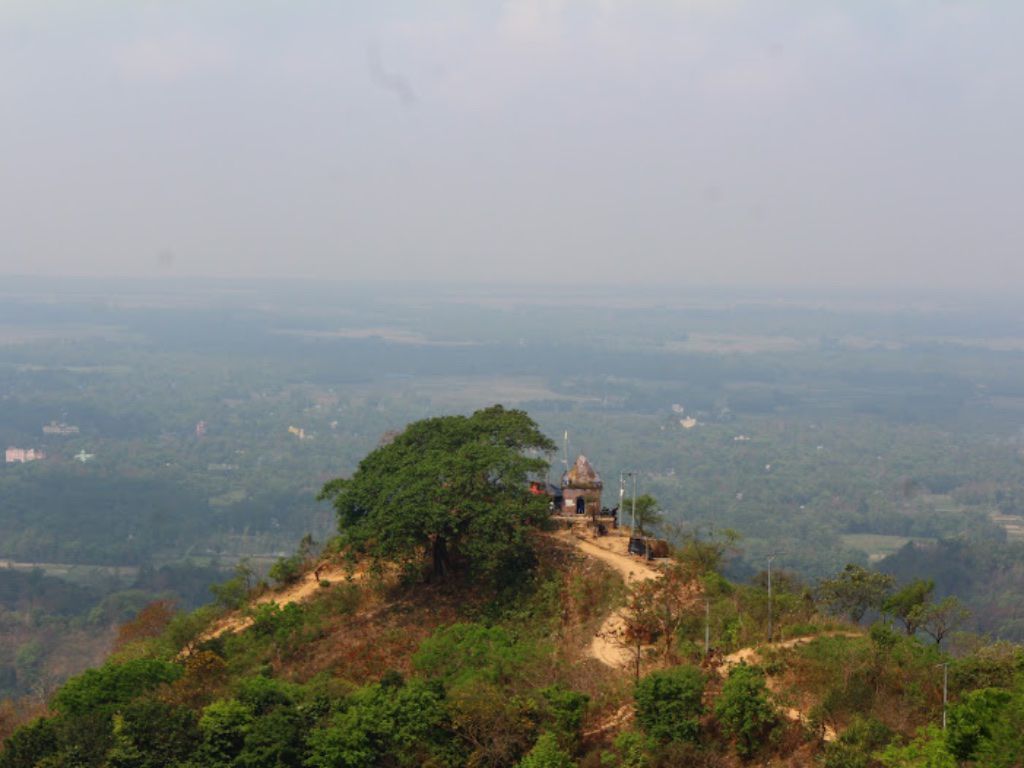
The Chandranath Temple atop Chandranath Hill near Sitakunda in Bangladesh is one of the most famous Shakti Peethas. The right hand of the Goddess is believed to have fallen at this site. The presiding deity here is Goddess Bhavani, and the guardian Bhairav is Chandrashekhar.
Shakti Peethas
Shakti Peethas are among the holiest pilgrimage sites in Hinduism. According to tradition, different parts of Goddess Dakshayani Sati’s body fell at various locations, which later became sacred Peethas. Although 51 Shakti Peethas are commonly mentioned, their exact number and locations vary across scriptures. The Peethanirnaya Tantra lists 51, while Shivcharita mentions 51 Peethas plus 26 sub-Peethas. The Kubjika Tantra refers to 42, and the Jnanarnava Tantra speaks of 50. These Peethas are spread across the Indian subcontinent, and in each Peeth, the Goddess resides alongside Bhairav.
Mythological Story
According to legend, in the Satya Yuga, King Daksha—father of Goddess Sati—held a grand yajna to take revenge on Lord Shiva. Daksha was enraged because Sati had married Shiva, a ‘yogi,’ against his wishes. He invited almost all gods and goddesses except Shiva and Sati. Despite Shiva’s reluctance, Sati attended the yajna with Shiva’s followers.
As she was not invited, she was humiliated at the ceremony. Daksha insulted Lord Shiva as well. Unable to bear her father’s disrespect toward her husband, Sati sacrificed herself through yogic fire.
Hearing this, the grief-stricken Shiva destroyed Daksha’s yajna and, carrying Sati’s lifeless body, began his cosmic dance of destruction. The universe was on the verge of collapse. The gods intervened, and Lord Vishnu used his Sudarshan Chakra to cut Sati’s body into pieces. These fragments fell at different places across the Indian subcontinent, forming the sacred Shakti Peethas.
History
According to the Sanskrit text Rajmala, around 1204 CE, King Bishwambhar Sur of the famous Adishur dynasty of Gaur attempted to visit the Chandranath Temple by river route. The poet Jayadev Goswami, author of Nigamakalptaru, is believed to have lived near Chandranath for a long time. King Dhanyamanikya of Tripura, a devoted Shaivite, used to send offerings to Chandranath Temple and even attempted to move a Shiva idol from here to his own kingdom.
The Temple and Surroundings
Sitakunda is known for its breathtaking natural beauty. It is considered a major pilgrimage site for Hindus. The Chandranath Temple stands on the highest peak of the region. Around it are many religious and cultural sites: Barabazar Puja Mandap, Kramdeshwari Kali Temple, Bholananda Giri Sevashram, Kachari Bari, Shani Temple, Premtala, Loknath Brahmachari Sevashram, Ramakrishna Sevashram, Girish Dharmashala, Dol Chattar, Nani Gopal Saha Pilgrims Inn, Mohanta Ashram, Vivekananda Smriti Panchavati, Jagannath Ashram, Sri Krishna Temple, Shankarmath and Ashram, Vishwanath Temple, Mahashmashan Bhavani Temple, Swayambhunath Temple, Gayakshetra, Jagannath Temple, Virupaksha Temple, Patalpuri, Annapurna Temple, and more. The old name of the Chandranath Temple was “Sitar Kund Temple.”
Every year, a grand festival is held here on Shivaratri or Shiv Chaturdashi. During this time, Sitakunda hosts a massive fair. Hindu residents of the area also organize a large fair in the month of Falgun (February–March). This event, known as the Shiv Chaturdashi Mela, attracts thousands of devotees and saints from Bangladesh and abroad. Nearly 1–2 million pilgrims visit the site every year.
Location on Google Maps
Source: Wikipedia
Date: 27.01.2022