In our Knowledge Hub section, we explore valuable information on the constitution, social structure, history, culture, and national heritage. Each post here aims to present knowledge in simple language, raise awareness, and encourage everyone to take an active role in community building.
This is the multi-page printable view of this section. Click here to print.
Knowledge Hub – A Repository of Constitution, Heritage & Learning
- 1: Constitution & Governance Overview
- 1.1: 1️⃣ Membership System
- 1.2: 2️⃣ Election Process
- 1.3: 3️⃣ Committee Structure
- 1.4: 4️⃣ Committee Hierarchy
- 1.5: 5️⃣ Financial Structure & Revenue Sharing
- 1.6: 6️⃣ Annual Budget Framework
- 1.7: 7️⃣ Creating New Units
- 1.8: 8️⃣ Debottor Property Development Model
- 1.9: 9️⃣ Constitution of Bangladesh Hindu Samaj
- 1.10: 🔟 Membership Fees & Structure
- 2: Technology
- 2.1: How to Set Up Your Telegram Account
- 2.2: How to Create a Free VPN Account – A Complete Guide
- 2.3: False Blasphemy Traps in Bangladesh
- 3: Hindu Culture, Heritage Preservation & Social Reform
1 - Constitution & Governance Overview
Welcome to the Constitution & Governance section of Bangladesh Hindu Samaj. Here we present how our organization is structured, how leadership is elected, how membership works, and how responsibilities flow across different committees. This section ensures full transparency, accountability, and clarity about how the Samaj operates.
1.1 - 1️⃣ Membership System
The membership framework of Bangladesh Hindu Samaj ensures that every individual can join in a structured, transparent, and community-driven way. Members play different roles based on their involvement, contribution, and readiness to serve.
Every new member must be introduced by an existing member.
Overview
The membership framework of Bangladesh Hindu Samaj ensures that every individual can join in a structured, transparent, and community-driven way. Members play different roles based on their involvement, contribution, and readiness to serve.
🔹 Membership Introduction Rules
- Every new member must be introduced by an existing member.
- In the beginning, the Supreme President will act as the sole introducer.
- Members can belong to only one unit at a time but may transfer without losing benefits.
🔹 Voting Power Structure
Voting weight grows based on how many new members a person introduces:
If member A introduces 100 people → voting power = 101
If member B introduces none → voting power = 1
Voting power also accumulates from descendant introductions:
- If A’s 100 members introduce 1000 more → A’s voting power becomes 1101
This creates a transparent merit-based leadership influence system.
🔹 Three Types of Members
1️⃣ Friend (Supporter)
- No membership fee
- Cannot vote or contest elections
- Cannot claim benefits
- Purpose: moral support & community goodwill
2️⃣ Beneficiary
- Pays membership fee
- Can vote
- Cannot contest elections
- Can receive community services and benefits
3️⃣ Volunteer
- Pays membership fee
- Can vote
- Only volunteers can contest elections
- Cannot receive benefits
- Primary role: service, leadership, community work
🔹 Membership Workflow
A current member registers a new person as a Friend.
If the Friend needs assistance → Unit Committee upgrades them to Beneficiary.
Unit Committee encourages Friends to become Volunteers.
To become a Volunteer:
- Must introduce at least 10 Friends
- Must serve actively for 1 year before contesting elections
🔹 Annual Renewal
During Durga Puja (Oct/Nov) every year:
- Members may switch categories
- Members may transfer units
- All membership records are updated
1.2 - 2️⃣ Election Process
The Bangladesh Hindu Samaj follows a multi-layered, democratic, and weighted voting system. Leadership is elected every December in a cascading structure from local units to the central level.
👉 Each voter casts votes equal to their voting power
Overview
The Bangladesh Hindu Samaj follows a multi-layered, democratic, and weighted voting system. Leadership is elected every December in a cascading structure from local units to the central level.
🔹 Annual Election Timeline
1️⃣ First Week of December – Unit President Election
- Voters: Volunteers + Beneficiaries
- Each voter casts votes equal to their voting power
2️⃣ Second Week – Upazila President Election
- Voters: Newly elected Unit Presidents
- Vote weight = total Volunteers + Beneficiaries in their unit
3️⃣ Third Week – District President Election
- Voters: Newly elected Upazila Presidents
- Vote weight = total Volunteers + Beneficiaries in their Upazila
4️⃣ Fourth Week – Central President Election
- Voters: District Presidents
- Vote weight = total Volunteers + Beneficiaries in their districts
🔹 Online Voting System
- Most elections are conducted digitally
- Ensures fast, transparent, tamper-proof results
- Enables scalable nationwide participation
1.3 - 3️⃣ Committee Structure
Bangladesh Hindu Samaj is governed through three powerful but balanced committees that ensure democratic decision-making, long-term continuity, and operational efficiency.
👉 Permanent Committee: Exists at: Central, District, Upazila, City, Unit levels
Overview
Bangladesh Hindu Samaj is governed through three powerful but balanced committees that ensure democratic decision-making, long-term continuity, and operational efficiency.
🔹 The Three Committees
1️⃣ Supreme Committee
Composed of the founding trustees
Lifetime tenure
Makes all highest-level policy decisions
Can induct or remove members by majority vote
Includes:
- Supreme President
- Supreme Vice-President
- Permanent Members
2️⃣ Permanent Committee
Exists at: Central, District, Upazila, City, Unit levels
Members appointed by the Supreme President
Lifetime tenure
Purpose:
- Ensure continuity
- Provide oversight
- Uphold constitutional integrity
Can override Executive Committee decisions with 2/3rd majority
3️⃣ Executive Committee
- Operational leadership body
- Exists at: Central, District, Upazila, City, Unit levels
- President elected annually
- Can appoint up to 10 committee members
- Handles daily work, development projects, campaigns
- President holds veto power
- President may remove or add members with 24-hour notice to the Permanent Committee
1.4 - 4️⃣ Committee Hierarchy
The Samaj runs through a tiered, top-down but locally empowered hierarchy. Each level reports to the one above it, ensuring smooth coordination.
👉 This structure ensures accountability, transparency, and efficiency.
Overview
The Samaj runs through a tiered, top-down but locally empowered hierarchy. Each level reports to the one above it, ensuring smooth coordination.
🔹 Hierarchy Flow
- Supreme Committee
- Central Permanent & Executive Committees
- District Permanent & Executive Committees
- Upazila Permanent & Executive Committees
- City Corporation Committees (parallel to Upazila level)
- Unit Permanent & Executive Committees
🔹 Responsibilities
- Supreme Level: national policies, Debottor trusts, financial audits
- Central Level: national execution & strategy
- District Level: coordination & supervision
- Upazila Level: operational monitoring
- Unit Level: grassroots activities, recruitment, service delivery
This structure ensures accountability, transparency, and efficiency.
1.5 - 5️⃣ Financial Structure & Revenue Sharing
Bangladesh Hindu Samaj operates on a transparent revenue-sharing model that ensures every administrative level has resources while maintaining upward accountability.
👉 Annual audit conducted by the Supreme Committee
Overview
Bangladesh Hindu Samaj operates on a transparent revenue-sharing model that ensures every administrative level has resources while maintaining upward accountability.
🔹 Revenue Flow (50% Upward Sharing)
Example: If a Unit earns 100 taka
- Unit keeps 50
- Sends 50 → Upazila
- Upazila keeps 25 → sends 25 → District
- District keeps 12.50 → sends 12.50 → Central
- Central keeps 6.25 → sends 6.25 → Supreme Committee
🔹 Spending Rules
- Executive President may spend current-year funds freely for community development
- Previous-year funds require Permanent Committee approval
- Annual audit conducted by the Supreme Committee
1.6 - 6️⃣ Annual Budget Framework
Newly elected Presidents take charge on January 1 every year and immediately begin structured financial planning.
👉 Prepare a 52-week budget
Overview
Newly elected Presidents take charge on January 1 every year and immediately begin structured financial planning.
🔹 Workflow
New Presidents take office
They become Permanent Committee members
They appoint up to 10 volunteers to form their Executive Committee
During the first week of January:
- Prepare a 52-week budget
- Obtain majority approval from Permanent Committee
Budget becomes official for the entire year
1.7 - 7️⃣ Creating New Units
New units are established in growing or underserved areas to expand community service and organizational reach.
👉 Revenue is shared across all committees
Overview
New units are established in growing or underserved areas to expand community service and organizational reach.
🔹 Steps to Form a New Unit
Supreme President forms a new Permanent Committee
Minimum 5 Permanent Members appointed
Permanent Members gather 100 Volunteers
Community meeting elects the new Executive Committee
Volunteers maintain contact with Debottor Property Trusts
Volunteers identify local investors
Supreme Trust develops Debottor lands through:
- leasing
- construction
- business development (hospitals, hotels, hostels, coaching center, shops, livestock, microcredit)
Franchise-model projects enable local employment
Revenue is shared across all committees
1.8 - 8️⃣ Debottor Property Development Model
The Samaj works to protect, revive, and economically activate neglected Debottor (Hindu trust) properties.
👉 Local small businesses operate through a franchise model
Overview
The Samaj works to protect, revive, and economically activate neglected Debottor (Hindu trust) properties.
🔹 How the System Works
Supreme Trust leases land/buildings from Debottor trustees
Investors fund development projects
Supreme Trust modernizes and prepares land for commercial use
Projects may include:
- Hotels / Hostels
- Schools / Coaching centers
- Shops & marketplaces
- Dairy / livestock projects
- Micro-enterprise & microfinance
Local small businesses operate through a franchise model
Income is shared with:
- Local Unit
- Upazila & District
- Central Committee
- Supreme Trust
1.9 - 9️⃣ Constitution of Bangladesh Hindu Samaj
Here is a simplified English version of the full constitution of Bangladesh Hindu Samaj.
👉 Each person can belong to only one Unit, but may transfer to another Unit without losing membership benefits.
Here is a simplified English version of the full constitution of Bangladesh Hindu Samaj.
1. Membership
1.1 Introduction of New Members
Any new member must be introduced by an existing member. Initially, only the Supreme President will act as the introducer for new members. Later, those introduced members will themselves introduce more people, allowing the community to grow organically.
Each person can belong to only one Unit, but may transfer to another Unit without losing membership benefits.
1.2 Voting Power and Its Growth
A member’s voting power increases based on how many members they introduce — directly or indirectly.
- If Member A introduces 100 members, their voting power = 100 + 1 = 101.
- If Member B introduces none, their voting power = 1.
Voting power difference decides the election outcome. Example: If A votes for Candidate X and B votes for Candidate Y, Candidate X wins by 100 votes (101 – 1 = 100).
Hereditary Growth of Voting Power
Voting power increases with the entire downline: If A introduces 100 people, and those 100 people collectively introduce 1000 people, A’s voting power = 1 + 100 + 1000 = 1101.
2. Categories of Members
The organization will have three types of members:
2.1 Friend Members
- Introduced by any current member
- No membership fee
- Cannot vote
- Cannot contest elections
- Cannot receive benefits
- Their role is to support and encourage the community
2.2 Beneficiary Members
- Must pay membership fees
- Can vote
- Cannot contest elections
- Can receive community benefits
- Eligible to access welfare services, aid programs, and support systems
2.3 Volunteer Members
- Must pay membership fees
- Can vote
- Can contest elections (only volunteers may stand for elections)
- Cannot receive benefits
- Their primary role is service, leadership, and organizational responsibility
3. Membership Process
- A current member collects the name, phone number, and (if possible) email of the interested person.
- The person is registered as a Friend Member under the introducer’s name.
- If the Friend requires help, the Unit Committee may upgrade them to Beneficiary Member.
- Otherwise, the Unit Committee will encourage them to become Volunteer Members.
Requirements to Become a Volunteer
- Must introduce at least 10 Friend Members
- Must work actively for at least 1 year to contest elections or join any Executive Committee
Annual Membership Reclassification
Every year during Durga Puja (Oct–Nov):
Members may change category
- (Beneficiary → Volunteer or Volunteer → Beneficiary, etc.)
Members may transfer from one Unit to another
4. Annual Election System
Elections occur vertically, moving upward from Unit → Upazila → District → Central.
4.1 Unit President Election
- Held in first week of December
- Voters: All Volunteers and Beneficiaries of that Unit
- Each voter casts votes equal to their voting power
4.2 Upazila President Election
- Held in second week of December
- Voters: All newly elected Unit Presidents under that Upazila
- Vote weight of each Unit President = Total number of Volunteers + Beneficiaries in their Unit
4.3 District President Election
- Held in third week of December
- Voters: All newly elected Upazila Presidents under that District
- Vote weight = Total Volunteers + Beneficiaries under the Upazila
4.4 Central President Election
- Held in fourth week of December
- Voters: All newly elected District Presidents
- Vote weight = Total Volunteers + Beneficiaries in their District
4.5 Online Voting System
Most elections will use an online voting platform to ensure fast, transparent, and accurate results.
5. Types of Committees
There are three types of committees within the organizational structure:
5.1 Supreme Committee
Consists of Trustees of the main Trust
Includes:
- Supreme President
- Supreme Vice President
- Lifetime Members
Term: Lifetime
Holds maximum decision-making authority
Majority of Trustees can:
- Remove any member
- Appoint new members
5.2 Permanent (Standing) Committee
Found at all levels:
- Central
- District
- Upazila
- City Corporation
- Unit
Key Characteristics
- Initially appointed by Supreme President (minimum 5 members)
- Term: Lifetime
- Secretary acts as the head
- Every newly elected Executive President becomes an automatic Permanent Member
- Cannot engage in daily operations
- Can cancel any decision of the Executive Committee with two-thirds votes
- Disputes between Permanent and Executive Committees escalate to the next higher-level Permanent Committee
Signing Authority
Only the Permanent Committee Secretary and Executive Committee President can jointly sign cheques.
5.3 Executive Committee
Exists at:
- Central
- District
- Upazila
- City Corporation
- Unit
Key Characteristics
- Head: President (elected yearly)
- Can nominate up to 10 committee members from qualified Volunteers
- Responsible for all daily operations
- President has veto power
- Can remove or appoint Executive Members, notifying the Secretary within 24 hours
Signing Authority
Cheques must be co-signed by:
- Permanent Committee Secretary
- Executive Committee President
6. Hierarchical Structure of Committees
- Supreme Committee – Highest policy authority
- Central Permanent Committee – Long-term strategy
- Central Executive Committee – National operations
- District Permanent and Executive Committees
- Upazila Permanent and Executive Committees
- City Corporation Committees
- Unit Permanent and Executive Committees
All committees operate under their respective higher committees.
7. Revenue Sharing System
All membership fees, donations, and income are shared upwards.
Example:
If a Unit earns 100 taka, then:
- Unit keeps 50 taka
- Sends 50 taka to Upazila
- Upazila keeps 25, sends 25 to District
- District keeps 12.5, sends 12.5 to Central
- Central keeps 6.25, sends 6.25 to Supreme Committee
Using the Funds
- Executive President may spend income for community development
- Spending previous year’s income requires approval from majority of Permanent Committee
- Supreme Committee conducts annual audits
8. Annual Budget
On January 1st, newly elected Presidents assume responsibility. They become Permanent Committee members and form Executive Committees with up to 10 Volunteers.
During the first week of January, they must:
- Prepare a full 52-week annual budget
- Get approval from the majority of the Permanent Committee
9. Formation of New Units
Wherever a new Unit is possible:
- Supreme President forms a Permanent Committee with at least 5 members
- Members gather at least 100 Volunteers
- Community is mobilized, and the Executive Committee is elected democratically
- Volunteers maintain communication with Debottor Property Trusts
- Local investors are identified and encouraged
Land and Business Model
Supreme Trust leases land/buildings from Debottor Trusts
Development funded by investors
Projects include:
- Hotels, hostels
- Schools, coaching centres
- Shops
- Livestock and farming projects
- Microfinance initiatives
Local businesses operate under a franchise model
Profit Sharing
Supreme Trust will share income with all relevant committees and stakeholders.
1.10 - 🔟 Membership Fees & Structure
We follow a simple rule to avoid nepotism and conflict of interest: Those who receive benefits cannot participate in decision-making; and those who make decisions cannot receive any benefits.
👉 Only members who contribute financially will hold voting rights.
Over the years, we have observed that many people lose motivation when engaging in community or social-service activities. The reason is simple—too many opinions, too many arguments, and very little actual progress. When individuals don’t feel personally invested, they slowly detach from the work.
But the moment people contribute financially—even a small amount—their engagement becomes deeper. They want to ensure their contribution is used properly, transparently, and for meaningful work. For this reason, all active members must contribute a membership fee. Only members who contribute financially will hold voting rights.
We follow a simple rule to avoid nepotism and conflict of interest: Those who receive benefits cannot participate in decision-making; and those who make decisions cannot receive any benefits.
Membership Categories
🟦 Friend
- Annual Fee: 0 BDT
- Time Commitment: At least 1 day per month Friends are well-wishers introduced by an existing member. They do not pay any membership fee, do not have voting rights, cannot run for elections, and cannot receive any benefits.
🟩 Beneficiary
- Annual Fee: 100 BDT
- Time Commitment: At least 1 day per week Beneficiaries contribute a small annual fee and are eligible to receive benefits. They can vote but cannot run for election.
🟧 Volunteer
- Annual Fee: 1,000 BDT
- Time Commitment: At least 1 day per week Volunteers pay a full membership fee, can vote, and can stand for election. However, they are not allowed to receive benefits.
Who Are We Looking For?
We work across multiple domains—healthcare, legal aid, community development, heritage protection, livelihood programs, documentation, digital operations, and more. Anyone with a sincere desire to serve is welcome. Your willingness to do good is your only qualification.
Our doors are open to everyone who wants to contribute, in any form they choose.
👉 Apply for membership to begin your journey with us.
Membership Guidelines
We keep our rules simple so that anyone with a good heart can join:
- We do not restrict religious belief. You may follow any faith or none at all.
- We do not restrict dietary choices. Vegetarian, non-vegetarian—anything is acceptable.
- We do not enforce any dress code; anything respectful to local culture is fine.
- Your personal worship practices are entirely your choice.
- We do not interfere with personal lifestyle choices.
How We Work
- All communication is digital—no printed materials are used (except where legally required).
- All accounting, documents, and records are maintained digitally.
- No fixed office hours; you work at your convenience as long as work is completed.
- The core team meets on weekends; others participate when available.
- All member activities are supervised through a remote digital system.
Member Requirements
To maintain transparency and smooth communication, all members must have:
- A personal Gmail account (not an office email).
- A smartphone (Android or iOS).
- Telegram app installed and active.
- Must subscribe to the official Telegram channel: @BangladeshHinduSamaj
First Task for New Members
Go to the Telegram channel and comment under the latest membership post with:
- Your Name
- Country / State / District / Upazila / Locality
- The unit you wish to join
Only after this step will your membership process continue.
All work-related communication must happen exclusively on Telegram. Email, WhatsApp, or phone communication is not permitted.
2 - Technology
In this section, we explore the technologies that support and enhance our work. From tools and platforms to workflows and best practices, we share practical insights to help you understand the systems behind our projects. This space will keep you updated on the tech we use, why we use it, and how it strengthens our overall mission.
2.1 - How to Set Up Your Telegram Account
To become a member of Bangladesh Hindu Samaj, you must have a Telegram account. All internal communication happens only on Telegram. We work in a remote-work mode. No matter where you live, you can work for your home district from any distance.

To join Bangladesh Hindu Samaj, you must have a Telegram account. All member communication happens only through Telegram. We all work remotely. Wherever you live, you can still serve your home district. All weekly meetings will happen through Telegram group video or audio calls. Face-to-face meetings will take place on the first Friday of every month or during special events.
For your safety, never share your phone number with strangers or on social
media. Keep your phone number hidden on Telegram. After creating your Telegram
account, set a username. Add _bdh at the end of your username.
For example, if your name is Pranab Kumar Sen, choose: pranab_bdh.
If not available, try pranabkumar_bdh, pranab1_bdh, or pranab2_bdh.
What is Telegram?
Telegram is a messaging app focused on speed and security. It is fast, simple, and free. You can use Telegram on all your devices at the same time. Your messages sync easily across your phone, tablet, and computer. Telegram is one of the top 5 most downloaded apps in the world with over 950 million active users.
You can send any type of message, photo, video, or file (doc, zip, mp3, etc). You can also create groups with up to 200,000 members or channels with unlimited audiences. You can message phone contacts or search by username. Telegram works like a combined SMS and email system, perfect for both personal and business communication.
How is Telegram different from WhatsApp?
Unlike WhatsApp, Telegram is a cloud-based messenger with continuous syncing. This lets you access your messages on many devices at once, including tablets and computers. You can share photos, videos, and up to 2 GB files easily.
Telegram takes less than 100 MB on your device. You can keep all media in the cloud. Just clear the cache when you need storage.
Telegram is faster and more secure because of its multi-data-center design and encryption. Personal messaging is free and will always remain free — with no ads and no subscription fees.
Which devices support Telegram?
You can use Telegram on smartphones, tablets, and computers. There are apps for iOS 11+, Android 6.0+, a native macOS app, and a universal desktop app for Windows, macOS, and Linux. You can also use Telegram Web for quick access.
How to Install Telegram?
Install from Google Play Store (Android)
Download Telegram from Google Play:
https://telegram.org/dl/android
Install from Apple App Store (iPhone)
Download Telegram from the Apple App Store:
https://telegram.org/dl/ios
Direct download (Android Telegram APK)
You can directly download Telegram for Android from:
https://telegram.org/dl/android/apk
This version has fewer restrictions and updates automatically from telegram.org.
This video link shows how to install Telegram on Android:
https://telegram.org/android
How to install the Telegram APK manually?
Download the latest Telegram APK from:
https://telegram.org/dl/android/apk
When installing APK from outside the Play Store, you must allow “Install Unknown Apps” depending on your phone model. See examples below:
Google Pixel:
Settings > Apps and notifications > Advanced > Special app access > Install
unknown apps > Select your browser > Allow from this source
Huawei (Android 8 or older):
Settings > Security & privacy > More > Install unknown apps > Select browser >
Allow app installs
Huawei (Android 10+):
Settings > Security > More settings > Install apps from external sources >
Select browser > Allow app installs
Motorola:
Settings > Apps & notifications > Select browser > Install unknown apps > Allow
from this source
Oppo:
Settings > Additional settings > Safety & Privacy > Install Apps from Unknown
Source > OK
OnePlus:
Settings > Apps & notifications > Special app access > Install unknown apps >
Select browser > Allow from this source
Sony:
Settings > Apps & notifications > Special app access > Install unknown apps >
Select browser > Allow from this source
Samsung (Android 8 or older):
Settings > Lock screen and security > Unknown sources > OK
Samsung (Android 10+):
Settings > Apps > Special access > Install unknown apps > Select browser > Allow
from this source
Xiaomi (Android 8 or older):
Settings > Additional settings > Privacy > Unknown sources > OK
Xiaomi (Android 10+):
Settings > Privacy protection > Special permissions > Install unknown apps >
Select browser > Allow from this source
How to Set Up a Telegram Account
Create a Telegram Account on Android
Step 1: Open the Telegram app
Find the Telegram icon on your phone and tap it.

Step 2: Tap “Start Messaging”
This begins the account creation process.

Step 3: Choose your country, enter your mobile number, then tap the arrow
Select your country, enter your phone number, and tap the arrow to proceed.

Step 4: Wait for the call
A missed call will verify your number.

Step 5: Enter your name and tap the arrow
Enter your first and last name. Tap the arrow to continue.

Step 6: Your account is now ready
You can now use voice calls, video calls, messaging, and many more features.

Create a Telegram Account on iPhone
Step 1: Open Telegram
Find and open the Telegram app on your device.

Step 2: Tap “Start Messaging”
Tap the button to move to the next step.

Step 3: Select country, enter number, tap “Continue”
Choose your country and enter your phone number. Then tap “Continue”.

Step 4: Enter the verification code
A small OTP code will be sent to your phone or Telegram. Enter the code.

Step 5: Telegram account created
Your Telegram account is now active. You can adjust settings anytime.

How to Set Up a Username
Create Your Telegram Username – Android
To link your Telegram account with our membership system, you must share your Telegram username. Follow these steps to find or create it:
- Open Telegram.
- Open the menu (Hamburger Menu).
- Select “Settings”.

If you already have a username, it will appear like this:

To add or edit your username, tap the username area and enter a new one.

Please remember this username as you will need to provide it later.
Telegram Username – iOS
Make sure Telegram is installed on your device.
To link your account to our membership details, you must know your Telegram username. Follow the steps below:
Load the Telegram app:
- Tap the Settings icon (marked as 1 in green).

- Your username appears under your icon (marked in green).
- To edit or create a username, tap Edit (marked as 2 in green).
If you choose to edit, you will see a new screen like this:

Remember your username carefully. You will need it later.
Hide Your Phone Number on Telegram
Do not share your phone number with strangers or on social media. Keep it hidden on Telegram. Follow the steps below:
- Open Telegram.
- Tap the Hamburger Menu and select “Settings”.
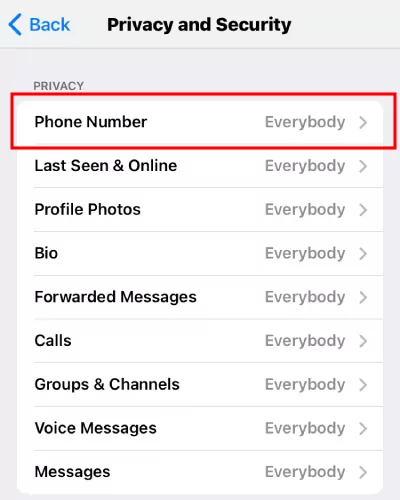
- Go to Privacy and Security → Phone Number.
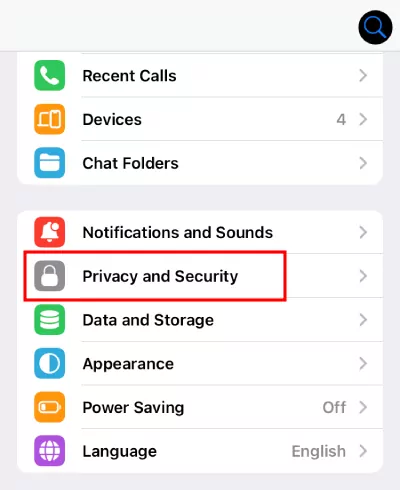
- Under “Who can see my phone number”, choose:
- My contacts — Only saved contacts can see your number.
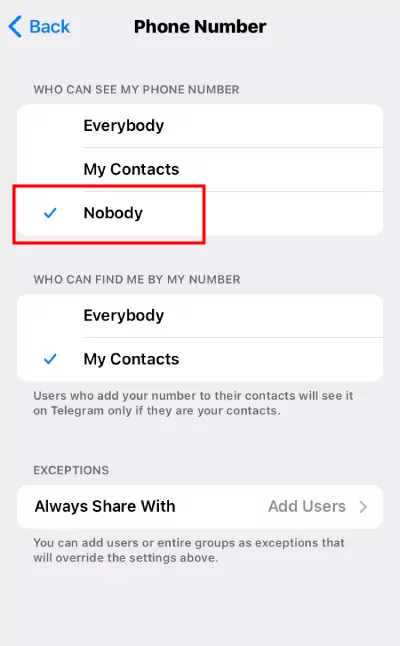
- Nobody — Hide your number from everyone.
- Everybody — Let everyone see your number.
If you select “Nobody”, you can also set “Who can find you by number” to “Everybody” or “Your contacts”.
For maximum safety on Telegram:
- Use Secret Chats for end-to-end encrypted messages.
- Turn off “People Nearby”.
- Use a VPN to hide your IP address.
Telegram Basics
Q: Who can I message?
You can message Telegram users saved in your phone contacts. You can also search for users by username — phone number is not required.
Q: Who can contact me?
Anyone who knows your phone number, or anyone you message first, can contact you.
If they don’t know your number, they can still find you if:
- You are in the same group.
- You have a public username (they can search for you).
- You enabled “People Nearby” (off by default).
Q: How do I know who in my contacts uses Telegram?
Users with Telegram accounts appear at the top of your contact list with their profile photos.
Q: How do I invite friends?
iOS:
Invites are sent as SMS messages. Carrier charges may apply. You can also share
the download link through any other platform — email, Facebook, WhatsApp,
Telegram, etc.
Link: https://telegram.org/dl/
Android:
Open the app menu (swipe right) → Select “Invite Friends”. Choose how you want
to send the invitation.
You can also send your t.me link to friends so they can find you without knowing your phone number.
Q: What do the ticks mean?
- One tick — Message delivered to Telegram cloud; your friend is notified.
- Two ticks — Message read by your friend.
There is no “Delivered to device” status because Telegram works across many devices.
Q: Can I hide my “Last Seen” time?
Yes. You can control who sees this in Privacy and Security settings.
People who cannot see your exact time will see an approximate range:
- Recently — within 1 second to 2–3 days
- Within a week — 2–7 days
- Within a month — 6–30 days
- Long time ago — more than a month (also shown for blocked users)
Q: Who can see me “Online”?
Same rules as Last Seen. Only people who can see your Last Seen can see your Online status.
Some exceptions apply when it is obvious that you are active. For example…
2.2 - How to Create a Free VPN Account – A Complete Guide
We request all our members to learn how to use VPN properly and use it when needed. If authorities ever block our site, Telegram, Facebook, or WhatsApp, you will be able to access them easily through VPN.

Why You Should Use a VPN
We request all our members to learn how to use a VPN properly and be capable of using it when needed. If authorities ever block our site, Telegram, Facebook, or WhatsApp, a VPN will help you access them without issues. So install the ProtonVPN app on your phone now. Is VPN legal in Bangladesh? Yes, VPN is legal in Bangladesh. Encrypt your data, hide your IP, and browse freely. But remember, with or without VPN, we never support breaking laws or licenses.
A Virtual Private Network (VPN) is a cybersecurity tool that encrypts your internet connection and protects your online privacy. It creates an encrypted tunnel between your device and the server, hiding your IP address and securing your data from unwanted tracking. The purpose is simple — enhance your online privacy and safety, protect your device from online threats, and allow uncensored browsing. It hides your real location and gives you privacy, especially while using public Wi-Fi.
Why Use VPN in Bangladesh
The Bangladesh Telecommunication Regulatory Commission (BTRC) often censors the internet, especially political content and social media posts. Recently, BTRC has begun a large-scale surveillance program and proposed new laws that might require storing and collecting user internet data. This is why using a VPN helps you bypass online censorship and monitoring.
Create a Free ProtonVPN Account
If you want to create a free VPN account, follow these simple steps:
Step 1: Go to the Proton VPN Website
Open this link in your browser: protonvpn.com/free-vpn and click “Get Proton VPN Free.” You can also click “Create account” from the homepage.

Step 2: Go to the Signup Page
After clicking “Get Proton VPN Free,” you will be redirected to the “Create your Proton Account” page. If coming from the homepage, click “Get Proton Free.”

Step 3: Provide a Recovery Email
A recovery email helps reset your password if you forget it. Enter your email and click “Start using Proton VPN.”

Step 4: Set Your Password
You may accept the system-generated password by clicking “Continue with this password.”
Or you can click “Choose my own password” and set your own. Confirm the password and click “Set new password.”


Step 5: Proton VPN Free Plan is Ready
You are now ready to use Proton VPN Free. You will be redirected to the Downloads page to download the client for your device.

What Do You Get in the Free Plan?
With the free plan, you can connect to servers in five countries: Netherlands, Japan, Romania, Poland, and the USA. Free users can connect only one device at a time.
Start using Proton VPN Free today and browse the internet safely!
How to Use the Proton VPN Android App
Step 1: Download and Log In
Download and install the Proton VPN Android app from the Play Store. The open-source version is also available on F-Droid or as an APK from GitHub. After installation, log in with your Proton VPN username and password.
Download Proton VPN for Android
Step 2: Connect to a Server
You can auto-connect to the fastest server for your location or choose any available server on your plan.
Your data is encrypted between your device and the VPN server, meaning:
- Your ISP cannot monitor your activities.
- Websites see the VPN server’s IP, not yours.
While connected, check your IP to confirm the VPN is active.
How to Use Proton VPN on iPhone and iPad
Step 1: Download and Log In
Download Proton VPN from the App Store and install it on your iPhone or iPad. Open the app and log in with your Proton VPN username and password.
Step 2: Connect to a Server
You can auto-connect to the fastest server or choose any server available in your plan.
Your data is encrypted between your device and the VPN server, meaning:
- Your ISP cannot track your activity.
- Websites see only the VPN server’s IP.
While connected, check your IP to confirm the switch.
What Is a VPN Ban?
A VPN ban is when governments, organizations, or ISPs restrict VPN usage. They may block VPNs to stop users from bypassing censorship or hiding activity. VPN traffic is identified and blocked using detection technologies, making VPN access limited or fully restricted.
Can VPN Be Blocked?
Yes, VPNs can be blocked. Governments and organizations may block VPNs to impose censorship or protect internal networks.
How to Know If Your VPN Is Blocked?
You may face the following issues:
- Connection failure
- Unable to connect to any server
- Websites not loading
- IP remains unchanged even after connecting
- VPN stops working on specific networks
How to Bypass a VPN Block?
If you wish to bypass restrictions, ensure it is legally allowed and follows local laws and network policies. Otherwise, it may cause legal issues. If the use is not illegal, you may try:
- Changing VPN protocol
- Switching to mobile data
How Are VPNs Blocked?
Governments or companies use several methods to block VPNs. They may collect the list of IPs used by a VPN service and block them. Firewalls may also be configured to block VPN ports. If you try connecting through a blocked port, the request is rejected.
They also use Deep Packet Inspection (DPI) to analyze data between your device and the server. DPI detects VPN-specific patterns and signatures. Once detected, the VPN connection is blocked.
Date: 17.08.2024
2.3 - False Blasphemy Traps in Bangladesh
In recent years, some people in Bangladesh have faced serious trouble due to false blasphemy accusations. These accusations can spread fear, damage lives, and break community trust. Many ordinary people do not understand how such situations begin or why they spread so fast. Learning about this topic helps communities understand risks, recognize patterns, and stay aware of how everyday actions—especially online—can be misused by others.
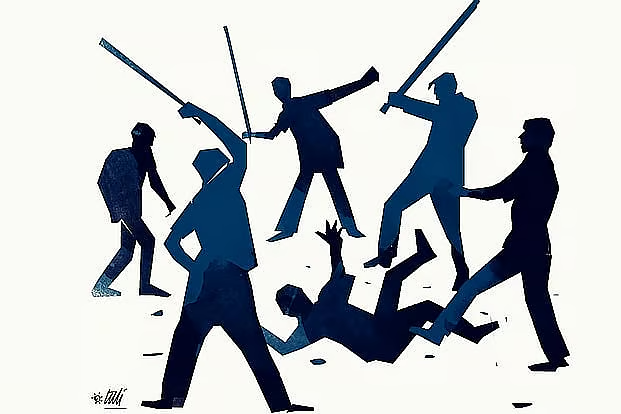
False Blasphemy Traps in Bangladesh: How Innocent Hindus Are Targeted—and How to Stay Safe
Introduction: Why This Topic Matters
In recent years, some people in Bangladesh have faced serious trouble due to false blasphemy accusations. These accusations can spread fear, damage lives, and break community trust. Many ordinary people do not understand how such situations begin or why they spread so fast. Learning about this topic helps communities understand risks, recognize patterns, and stay aware of how everyday actions—especially online—can be misused by others.
Background: Why False Blasphemy Cases Happen
False blasphemy cases do not usually happen by accident. They are often planned carefully for personal gain.
In simple terms, a false blasphemy case means someone is wrongly accused of insulting religion, even though they did not do so. These accusations are sometimes created to harm a person or family.
Why such accusations are created
- Some groups use false accusations to take over land or property.
- Business rivals may try to remove someone from competition.
- A person may be targeted at work to push them out or isolate them.
- Families may be forced to leave their homes due to fear.
How these accusations are spread
- Fake social media posts are created in someone’s name.
- Images or messages are edited to look offensive.
- Old or hacked accounts are used to post false content.
What often follows
- Large groups gather quickly without checking facts.
- Pressure is created by powerful or organized groups.
- Victims often stay silent due to fear of harm.
Understanding this background helps people see that these cases are often about power and control, not religion.
Common Methods Used to Trap Innocent People
False accusations often follow similar patterns, especially online.
How people are targeted
- A social media account is created or hacked using the victim’s name.
- False or offensive content is posted and blamed on the victim.
- People are provoked into emotional replies that are later misused.
- Fake profiles with familiar names are added to friend lists.
- Old or forgotten accounts are taken over because they are not protected.
These methods work because many people trust what they see online without checking the source.
Understanding Commonly Suggested Safety Measures
Many community discussions focus on digital safety. These points are often shared to explain how online activity can affect real life.
Social media hygiene
This refers to basic care of online accounts.
- Strong passwords reduce the chance of account misuse.
- Extra login steps help confirm the real account owner.
- Checking login activity helps notice unusual access early.
Privacy controls
Privacy settings decide who can see or share posts.
- Limiting visibility reduces misuse by strangers.
- Controlling comments and sharing reduces misinterpretation.
- Reviewing tagged posts avoids unwanted public display.
Account management
Inactive or forgotten accounts are often misused.
- Recovery keeps control with the original owner.
- Deletion removes unused accounts from risk.
- Searching one’s name helps notice fake profiles.
Online behaviour
Online conversations can be misunderstood.
- Neutral language reduces the chance of conflict.
- Saving suspicious messages helps document events.
- Informing trusted people spreads awareness early.
These practices are discussed because online actions often have offline consequences.
Understanding High-Risk Online Mistakes
Certain online actions are often linked to higher risk in tense environments.
Online interactions
- Religious or political discussions can be misquoted.
- Emotional replies are easier to misuse than calm silence.
Friend requests
- Some fake profiles use familiar names or photos.
- New accounts with little activity are harder to verify.
Posting habits
- Public posts reach unknown audiences.
- Jokes, symbols, or trending topics can be misunderstood.
Multiple accounts
- Extra or forgotten accounts are easier to hijack.
- Each unused account increases risk exposure.
Understanding these risks helps people see how small actions can lead to serious outcomes.
Community-Level Awareness
Safety is not only individual. It also involves the wider community.
- Trusted offline relationships help verify information.
- Sharing knowledge builds collective awareness.
- Clear records of land, work, and identity reduce disputes.
- Document copies help establish facts during conflict.
When communities are informed, false stories lose power.
When a Threat or Accusation Appears
False accusations often spread quickly and emotionally.
- Public reactions can increase tension.
- Digital records help clarify what actually happened.
- Family and community elders often provide guidance.
- Reduced online activity lowers immediate exposure.
Understanding these responses helps people remain calm during stressful moments.
Conclusion: The Value of Awareness
False blasphemy traps rely on fear, confusion, and lack of information. Learning how these situations develop helps communities stay alert and informed. Awareness does not remove risk, but it helps people recognize patterns early and understand the importance of careful digital and social behavior. Knowledge strengthens communities by replacing fear with understanding.
Step-by-Step Awareness: Understanding Safety Settings on Popular Social Media Platforms
Introduction
Many false accusations and misunderstandings today begin on social media. People often do not realize that small settings inside apps like Facebook, Instagram, YouTube, or WhatsApp can decide who sees their content and how it can be used. This section explains, in very simple language, how these platforms work and why people talk about setting them carefully. The purpose is to help readers understand what these settings mean and how online activity can affect real life.
Facebook: Understanding Basic Account Safety and Visibility
What Facebook Is in Simple Terms
Facebook is a place where people share thoughts, photos, and messages. What many do not realize is that Facebook is also public by default unless settings are changed.
Why Facebook Settings Matter
Anything visible to “Public” can be seen by strangers, saved, edited, or shared outside Facebook. This is why many problems start here.
Key Areas People Talk About
Profile and Posts Visibility
Facebook allows posts to be seen by:
- Everyone (Public)
- Only friends
Public posts can spread very fast without control.
Friends List Awareness
- Anyone on a friends list can see personal posts.
- Fake profiles sometimes look real and friendly.
Old Posts and Tags
- Old posts may still be visible.
- Others can tag a person in posts or photos.
Why This Affects Daily Life
A single misunderstood post or tag can be copied and shown outside context. Many people face trouble because they forgot what was posted years ago.
Instagram: Understanding Photos, Stories, and Followers
What Instagram Is
Instagram mainly shares photos, short videos, and stories. Many users think it is harmless because it feels casual.
Why Instagram Can Create Risk
Images and short text are easy to misunderstand. Screenshots can be taken silently.
Important Things People Should Understand
Public vs Private Accounts
- Public accounts can be viewed by anyone.
- Private accounts limit viewing to approved followers.
Followers and Messages
- Anyone can send message requests.
- Fake profiles often follow first, then provoke conversations.
Stories and Reels
- Stories disappear visually but screenshots remain.
- Reels can reach unknown viewers if public.
Community Impact
A single image or caption, when taken out of context, can create serious misunderstanding beyond Instagram.
YouTube: Understanding Comments and Channels
What YouTube Is
YouTube is mainly for watching and posting videos. Even people who do not upload videos often comment.
Why Comments Matter
Comments are public and searchable. Even old comments can resurface later.
Areas Often Overlooked
Commenting on Videos
- Comments stay visible for years.
- Arguments in comment sections are often recorded by others.
Channel Activity
- Even an inactive channel shows comment history.
- Profile names and photos are visible publicly.
Why Average Users Should Care
Many people forget what they commented on months or years ago. Screenshots of comments can be misused later.
WhatsApp: Understanding Groups and Messages
What WhatsApp Is
WhatsApp is used for private messages and group chats. Many people feel it is fully private, but this is not always true.
How WhatsApp Content Spreads
- Messages can be forwarded.
- Screenshots can be taken.
- Group messages reach many people quickly.
Important Group-Related Points
Group Membership
- Anyone in a group can save messages.
- Not all group members are personally known.
Group Discussions
- Heated discussions often happen in groups.
- Messages sent in emotion are hard to control later.
Why This Matters in Daily Life
Many misunderstandings begin inside WhatsApp groups and later appear outside the group without explanation.
General Understanding Across All Platforms
One Common Reality
- Online content does not disappear easily.
- Even deleted content may already be saved by someone else.
Why People Talk About Digital Caution
- Online words can be separated from context.
- Images and text can be edited.
- Silence or limited sharing reduces misunderstanding.
How Awareness Helps
- People understand how platforms work.
- Communities learn why small actions matter.
- Fear reduces when knowledge increases.
Conclusion: Learning Before Reacting
Social media platforms are tools. They are not good or bad by themselves. Problems arise when people do not understand how visible their actions are. Learning how Facebook, Instagram, YouTube, and WhatsApp function helps people stay informed and calm. Awareness does not stop all risks, but it helps people recognize situations early and understand why careful online behavior is often discussed in community safety conversations.
Immediate Check: Reviewing and Securing Your Existing Social Media Profiles
Why This Immediate Check Is Important
Many people face problems not because of new posts, but because of old posts, forgotten settings, or unused accounts. Content shared years ago, or posted by someone else and linked to your name, can still be seen today. That is why it is important to check profiles immediately, even if you are not active online.
This section explains, in very simple language, what people should look for and understand right now.
First Step: Check Your Profile Today
The first step is to open each social media app you use and look at your profile as a stranger would see it.
- Check your profile photo, name, and bio
- Scroll through old posts
- Look at comments and tags
- See who can view your content
Many people are surprised to see how much is still public.
Making All Posts “Friends Only”
What “Friends Only” Means
“Friends only” means:
- Only people you personally accepted can see your posts
- Strangers and unknown users cannot view or share them
This setting is important because public posts can travel far beyond your control.
Making Past Posts Safer
Most platforms allow users to:
- Change all old public posts to “Friends only”
- This includes posts made many years ago
People often forget old posts, but others may not.
Disabling Tagging and Review Options
What Tagging Is
Tagging allows others to:
- Add your name to posts or photos
- Make that content appear on your profile
Why Tagging Can Be Risky
- You may be tagged in content you did not create
- Others may misunderstand the context
- Screenshots may spread without explanation
What to Look For
Options that allow you to:
- Review tags before they appear
- Stop others from tagging without permission
This helps keep control over what appears under your name.
Deleting Old or Unused Profiles
Why Old Profiles Are Dangerous
Old or unused accounts are often:
- Forgotten
- Poorly protected
- Easier to misuse or hack
These accounts can be used to:
- Post false content
- Impersonate the original owner
Platforms Where This Is Common
- YouTube
If an account is no longer used, it is safer to delete it completely.
If You Do Not Know How to Change These Settings
Many people are not familiar with app settings, and that is normal.
If you feel confused:
- Ask a trusted family member
- Ask someone younger or more familiar with smartphones
- Sit with them and check settings together
There is no shame in asking for help. Learning together strengthens safety.
A Simple Reminder for Everyone
- Old posts still exist
- Public content spreads quickly
- Forgotten accounts carry risk
- Small setting changes can reduce misunderstanding
Closing Note: Awareness Starts With One Check
Checking your social media profile today is a simple but powerful step. It does not require technical knowledge or special skills. It only requires attention and time. Understanding what is visible under your name helps reduce confusion, fear, and misuse. Awareness begins with looking, understanding, and learning—together as a community.
3 - Hindu Culture, Heritage Preservation & Social Reform
This blog section highlights key topics related to Hindu culture, heritage preservation, and social reform. Regular posts are published here on subjects such as the protection of temple–ashram heritage and Debottor properties, festival traditions, community leadership development, social awareness, volunteer work, and various organizational activities. It serves as a knowledge-based platform to strengthen and organize our history, identity, and collective power.
3.1 - Shakti Peethas: Worship of Divine Energy & Sacred Pilgrimage
Shakti Peethas: Worship of Divine Energy & Sacred Pilgrimage
The core centers of Shakti worship in Hinduism are the Shakti Peethas.
These sacred sites—believed to be where parts of Devi Sati’s body fell or where
divine energy manifested—are revered as places of deep faith, spiritual
practice, and inner awakening.
In this section, we present a series of articles exploring the history, mythology, religious significance, travel routes, and nearby attractions of various Shakti Peethas across Bangladesh.
3.1.1 - Jessoreswari Shaktipeeth, Satkhira
Jessoreswari Shaktipeeth is located at Ishwaripur village in Shyamnagar, Satkhira. The name Jessoreswari means “Goddess of Jessore”. Here the palm or hand-lotus of Sati is believed to have fallen. The presiding Goddess is Jessoreswari and the Bhairava is Chand.
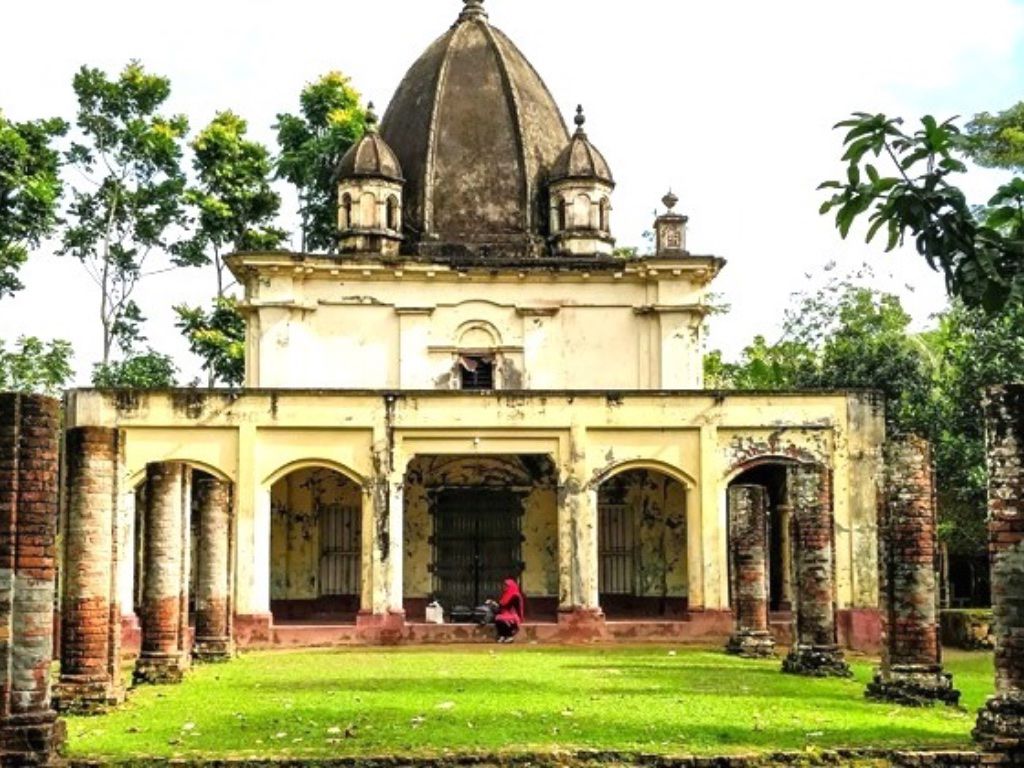
Jessoreswari Shaktipeeth stands at Ishwaripur in Shyamnagar, Satkhira.
The name means “Goddess of Jessore”. Here the palm or hand of Sati fell.
The presiding deity is Jessoreswari and the Bhairava is Chand.
Shaktipeeth
Shaktipeeths are among the holiest sites in Hinduism. According to belief,
different body parts of Goddess Dakshayani Sati lie enshrined in these sacred
spots.
Though commonly 51 Shaktipeeths are mentioned, scriptures differ about the
exact
number and location. Pithanirnaya Tantra lists 51. Shivacharita mentions 51
plus
26 subsidiary peethas. Kubjika Tantra lists 42, and Jnanarnava Tantra
mentions 50.
These shrines are scattered across the Indian subcontinent. In every
Shaktipeeth,
the Goddess is worshipped together with Bhairava.
Mythological Story
Legend says that in Satya Yuga, King Daksha—father-in-law of Shiva—held a
grand
yajna to insult Shiva. He was angry because his daughter Sati had married the
‘ascetic’ Shiva against his wishes. Daksha invited all gods except Shiva and
Sati.
Despite Shiva’s reluctance, Sati attended with his followers.
She was not treated with honor. Daksha openly insulted Shiva. Unable to bear
her
father’s humiliation of her husband, Sati gave up her life through yogic fire.
Hearing this, the grief-stricken Shiva destroyed the yajna and began his cosmic
dance
carrying Sati’s body. The world moved toward destruction. To save creation, the
gods
requested Vishnu to intervene. Vishnu then cut Sati’s body with the Sudarshan
Chakra.
Her limbs fell across many places of the subcontinent, which later became known
as
Shaktipeeths.
History
It is believed that a Brahmin named Anari built the original temple. He constructed 100 doorways in this shrine. However, the exact date of construction is unknown.
Later, during the reign of Lakshman Sen and Maharaja Pratapaditya, the temple was renovated. A story says that Pratapaditya’s general saw a beam of divine light fall on a stone shaped like a human palm. Pratapaditya then began worshipping the Goddess and built this Kali shrine.
The local zamindar donated nearly 200 bighas of land to the temple. But over time, influential land-grabbers forged documents and took control of the temple property.
The Idol
The Tantra Chudamani states:
‘In Jessore lies the hand-lotus of Sati. The Goddess is Jessoreswari, and the
Bhairava is Chand. Whoever worships here with devotion attains fulfilment.’
Only the face of the deity is visible above the altar. Her hands and feet remain unseen. The entire idol is covered with velvet.
Jessoreswari is also worshipped as per Tantric rituals. Every year the grand Shyama Puja is held here. The Goddess is considered very active and powerful. Thousands of devotees offer prayers and fulfil vows. A large homa yajna is performed. The idol is adorned with ornaments. A three-day fair is held outside the temple. Goats are sacrificed.
Near the main shrine stood a huge Natmandir (pavilion), from where devotees
could
view the Goddess’ face. It was built in the 13th century, possibly by Lakshman
Sen
or Pratapaditya. But its exact builder is unknown. After 1971, it collapsed.
Today only a few old pillars remain standing.
Once, a tall boundary wall surrounded the complex. Except for the main temple,
everything else has vanished over time. The old Naubatkhana is now in ruins.
Visit by the Prime Minister of India
On 27 March 2021, India’s Prime Minister Narendra Modi visited the Jessoreswari Kali Temple in Shyamnagar, Satkhira. Before the visit, the temple walls were painted and repaired. A long-damaged banyan area near the entrance was filled and a spacious courtyard was built with brick and stone.
Location on Google Maps
Source: Wikipedia
Date: 27.01.2022
3.1.2 - Srisail Shakti Peeth, Sylhet
Srisail is a Shakti Peeth located in Jainpur village of South Surma, about 3 km northeast of Sylhet city in Bangladesh. Here the neck (back portion of the throat) of Devi Sati is believed to have fallen. The presiding deity is Devi Mahalakshmi, and the accompanying Bhairav is Sarbananda.
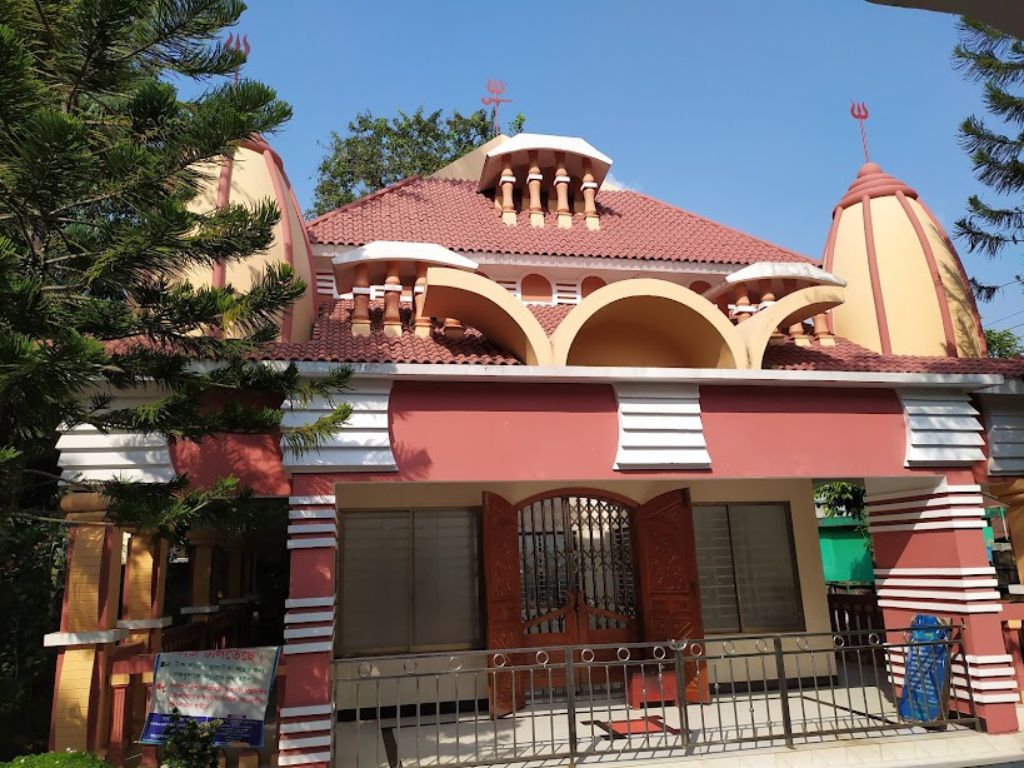
Srisail is a sacred Shakti Peeth located in Jainpur village of South Surma, about 3 km northeast of Sylhet city in Bangladesh. Here the neck (back portion of the throat) of Devi Sati is said to have fallen. The presiding deity is Devi Mahalakshmi, and the Bhairav is Sarbananda.
Shakti Peeth
Shakti Peethas are among the holiest pilgrimage sites in Hinduism. According to belief, various body parts of Devi Dakshayani Sati are enshrined at these locations. Though commonly 51 Shakti Peethas are mentioned, scriptures differ about the exact number and their locations. Peethanirnaya Tantra lists 51 Peethas. Shibcharita mentions 51 main Peethas and 26 subsidiary ones. Kubjika Tantra counts 42, while Jñanarnava Tantra lists 50. These Peethas are spread across the Indian subcontinent. In every Shakti Peeth, the Devi is worshipped along with a Bhairav.
Mythological Background
According to legend, in Satya Yuga, King Daksha arranged a grand yajna to take revenge on Mahadev. Daksha was angered because his daughter Sati married the ‘yogi’ Shiva against his wishes. Daksha invited almost all gods except Mahadev and Sati. Despite Shiva’s reluctance, Sati went to the ceremony with Shiva’s attendants.
Since she was not invited, Sati was insulted and ignored. Daksha even spoke ill of Mahadev. Unable to tolerate her husband being dishonored, Sati immolated herself through yogic fire.
Hearing this, a grief-stricken Shiva destroyed Daksha’s yajna and began the Tandava of destruction with Sati’s body on his shoulder. The universe was on the verge of collapsing. The gods pleaded for peace, and Vishnu used his Sudarshan Chakra to dismember Sati’s body. Her body parts fell across many places in the subcontinent, which then became holy Shakti Peethas.
History
It is believed that the fallen part rested on a stone, and this very stone was
worshipped since ancient times. The Peeth remained hidden for many years.
During the 12th–13th century, a road construction project was underway here. An
overseer named Debiprasad Das hired laborers for the work. While digging, a
black stone surfaced. It was impossible to move it. A laborer struck the stone
with a crowbar and split it.
At that moment, a young girl emerged from the nearby forest, slapped the laborer, and vanished instantly. That night, Debiprasad dreamt of Devi Mahalakshmi, who instructed him to establish her worship at that very spot.
Debiprasad arranged to build a temple with thousands of bricks.
But the Devi again appeared in his dream, saying: “I do not wish to remain
confined. Keep me in the open.” So he followed her command.
Bhairav Sarbananda was also unknown at first. A great saint, Brahmananda Giri,
came to Srihatta and attained siddhi in Devi’s worship. Through spiritual
insight, he discovered that Bhairav was on a small hill west of the Devi.
One night, he climbed the hill with disciples and pointed to the spot.
Unfortunately, in 1281 Bangabda, he passed away before Bhairav could be revealed. His disciple, Birajanath Nyayabagish—also a great saint—had a strange dream in 1286 Bangabda. He saw his guru on that hill saying, “Bhairav is here, I will reveal him.”
The next morning, two of his disciples arrived and said they had the same dream.
Realizing the divine sign, Birajanath and the disciples went to the hill and dug
the ground. A Shivalinga, along with the sacred Gauripatta, emerged.
Thus Bhairav Sarbananda manifested.
The Deity
According to Tantra:
“Greeba ppaat Srihatt’e sarva-siddhi pradaayinee.
Devi tatra Mahalakshmi, Sarbanandaścha Bhairava.”
Sati’s neck (back of the throat) fell here, making it known as “Greeba Mahapeeth.” Devi is worshipped as Mahalakshmi, and the Bhairav temple of Sarbananda is situated nearby in Gotatikar village.
Location on Google Maps
Source: Wikipedia
Date: 27.01.2022
3.1.3 - Sugandha Shaktipeeth, Barishal
Sugandha Shaktipeeth is located in Shikarpur village, 10 miles north of Barishal, Bangladesh. It is believed that Devi Sati’s nose fell here. The presiding deities are Devi Sunanda and Bhairav Tryambak. The temple of Bhairav Tryambak is situated in Ponabaliya, 5 miles south of Jhalokathi.
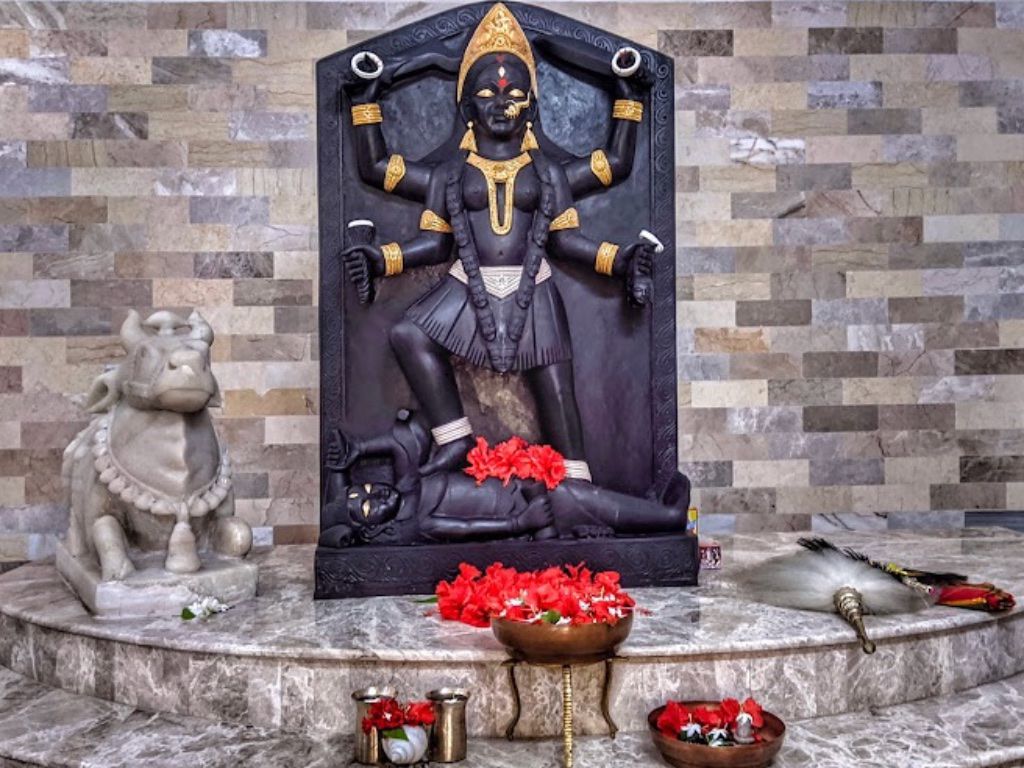
Sugandha Shaktipeeth is located in Shikarpur village, about 10 miles north of Barishal, Bangladesh. It is believed that Devi Sati’s nose fell at this site. The presiding deities are Devi Sunanda and Bhairav Tryambak. The temple of Bhairav Tryambak stands in Ponabaliya, 5 miles south of Jhalokathi.
Shaktipeeth
Shaktipeeths are among the holiest pilgrimage sites in Hinduism. According to traditional belief, different parts of Devi Dakshayani Sati’s body fell at these sacred locations. Although 51 Shaktipeeths are commonly mentioned, the exact number varies across scriptures. According to Pithanirnaya Tantra, the number is 51. The Shivacharita text mentions 51 Shaktipeeths along with 26 Upapeethas. The Kubjika Tantra lists 42, while the Jnanaarnava Tantra notes 50.
These Shaktipeeths are spread across the Indian subcontinent. In every Peeth, Devi Shakti resides alongside a form of Bhairava.
Mythological Story
According to legend, in Satya Yuga, King Daksha—father of Devi Sati—arranged a grand yagna with the intention of insulting Lord Shiva. Daksha was furious because his daughter had married Shiva, a ‘yogi,’ against his wishes. He invited almost all gods and goddesses except Shiva and Sati. Despite Shiva’s reluctance, Sati went to the ceremony with Shiva’s attendants.
Since she was uninvited, Sati was not treated with respect. Daksha even insulted Lord Shiva publicly. Unable to bear her father’s disrespect towards her husband, Sati immolated herself through yogic power.
Hearing this, a grieving and enraged Shiva destroyed Daksha’s yagna and began the Tandava—the cosmic dance of destruction—carrying Sati’s lifeless body. The world started moving toward devastation. To stop this, the gods pleaded with Vishnu, who used his Sudarshan Chakra to cut Sati’s body into pieces. The body parts fell across various regions of the Indian subcontinent, and those places became known as the sacred Shaktipeeths.
History
In ancient times, the holy Sugandha River flowed past Ponabaliya and Samrail in riverine Bangladesh. Over the years, the river lost its depth and flow, becoming a narrow stream known today as the Sonda. On the eastern bank lies the Devi Peeth, and on the western bank stands the temple of Bhairav Tryambakeshwar.
The region was once dense forest. People feared to enter even during the day. During that time, a wealthy zamindar named Shriram Ray of Shikarpur saw Lord Shiva in a dream commanding him to seek Him. The next morning, Ray went into the forest with many people to search for the divine presence.
Some cowherd boys who grazed cattle there knew of a mysterious mound. They told him a story:
Their cows had stopped giving milk as before. The owners suspected the cowherds of stealing milk. Determined to catch them red-handed, one owner followed them into the forest. Hidden behind trees, he saw the cows walk to a small mound and spontaneously let milk flow from their udders onto it. Curious and confused, he wondered what the mound contained. He gathered dry wood and set the mound on fire. As flames rose, he saw a dark- complexioned girl run from the mound into a nearby waterbody.
Hearing this account, Shriram Ray ordered excavation of the mound. As digging began, a Shiva-linga emerged. Ray intended to install it in his private temple, but no matter how many men tried, they could not move the linga. That night, Lord Shiva again appeared in Ray’s dream and said, “Establish Me right there. Also remember—there should be no covering over My abode.” Ray obeyed and arranged for daily worship at that spot.
Another incident occurred: A devout Brahmin named Panchanan Chakrabarti lived in Shikarpur. He was pious, honest, and kind-hearted. One night, Goddess Kali appeared to him in a dream and said, “I dwell in the womb of the Sugandha River in stone form. Bring Me out and establish My worship.” Chakrabarti followed the instructions, retrieved the stone idol, and initiated daily worship. Villagers came forward to offer what little they could for the service of the Mother.
Idol
The Annada Mangal by poet Bharatchandra states:
“Sugandhaye nasika porilo chakrahata.
Tryambak Bhairav tahe Sunanda debata.”
Sadly, the ancient idol was stolen. The exact location of Devi Sati’s fossilized body part at this site is no longer known. Today, the temple houses an image of Goddess Ugratara, worshipped as Devi Sugandha. She holds a sword, khatvanga, blue lotus, and a skull-garland. Above Her head stand Kartikeya, Brahma, Vishnu, Shiva, and Ganesha. The idol follows the iconography of Buddhist Tantric Ugratara.
The original ancient temple of Sugandha Shaktipeeth no longer exists. The current shrine is a newly built structure.
Worship here follows a specific Tantric method rooted in Buddhist Tara traditions.
Google Maps Location
Source: Wikipedia
Date: 27.01.2022
3.1.4 - Bhabanipur Shaktipeeth, Bogura
Bhabanipur Shaktipeeth, one of the 51 sacred sites of Devi Sati, is located on the banks of the Karatoa River in Sherpur, Bogura, Bangladesh. It is believed that Sati’s left anklet fell here. The Goddess is worshipped as Aparna, and the Bhairava here is Bamesh (Baman).
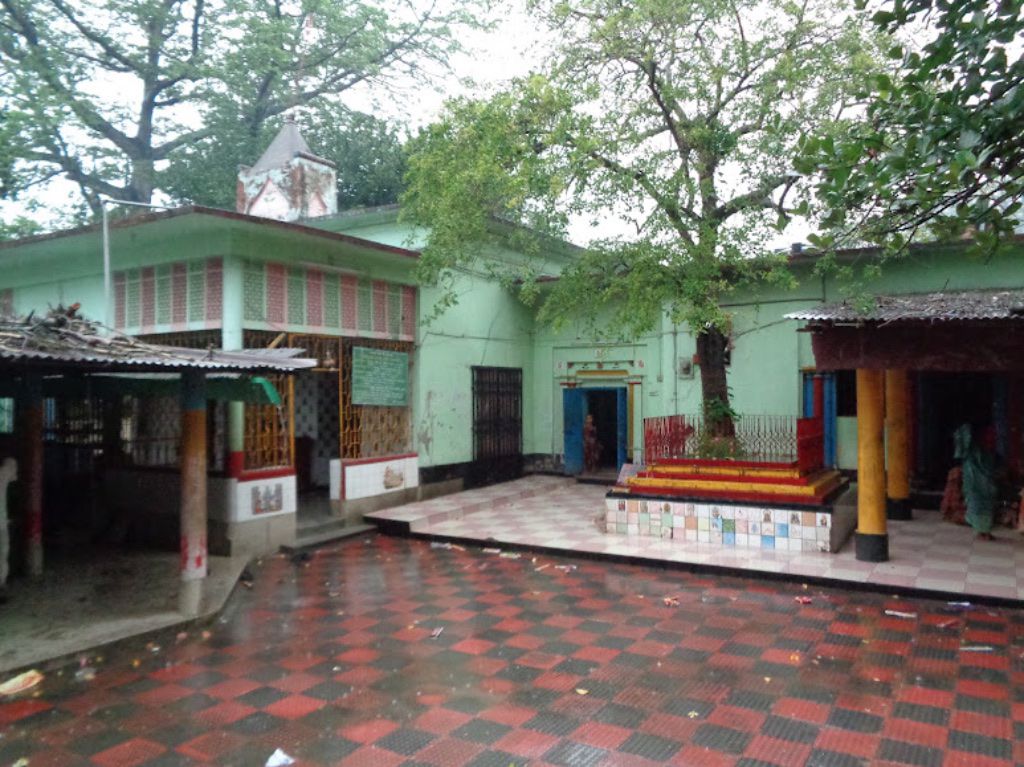
Bhabanipur Shaktipeeth, one of the 51 sacred sites of Devi Tara, stands on the banks of the Karatoa River in Sherpur, Bogura. It is believed that Sati’s left anklet fell at this holy spot. The Goddess is known as Aparna, and the Bhairava here is Bamesh (Baman).
Shaktipeeth
Shaktipeeths are among the holiest pilgrimage destinations in Hinduism.
According to tradition, different parts of Devi Dakshayani Sati’s body
manifested at these sacred locations. Though 51 Shaktipeeths are most commonly
mentioned, the number and locations vary across scriptures. Pithanirnaya
Tantra lists 51.
Shivacharita mentions 51 Shaktipeeths and 26 Upapeethas. Kubjika Tantra
mentions 42, while Jnanaarnava Tantra records 50. These holy sites are spread
across the Indian subcontinent.
In every Shaktipeeth, the Goddess resides with a form of Bhairava.
Mythological Story
According to legend, in Satya Yuga, King Daksha arranged a grand yagna to insult
Lord Shiva. Daksha was furious because his daughter Sati had married Shiva, a
‘yogi,’ against his wishes. He invited almost all gods except Shiva and Sati.
Despite Shiva’s reluctance, Sati attended the ceremony with Shiva’s attendants.
As she was uninvited, Sati was not treated with honor. Daksha even publicly insulted Shiva. Unable to bear her father’s disrespect, Sati immolated herself through yogic power.
Hearing this, the grief-stricken Shiva destroyed Daksha’s yagna and began the fearsome cosmic dance while carrying Sati’s body. Creation moved toward destruction. The gods appealed to Vishnu, who used his Sudarshan Chakra to cut Sati’s body into pieces. These body parts fell in many places across the subcontinent, becoming sacred Shaktipeeths.
History
It is said that long ago, a conch-maker was walking past a pond near the deep forest beside the Bhabanipur temple. A little girl, wearing vermilion on her forehead, approached him and claimed to be the princess of Natore Palace.
She bought a pair of conch bangles and told the conch-maker to collect the price from a basket kept in a particular spot in the palace. Touched by her gentle request, the conch-maker gave her the bangles.
Hearing the story, the queen of Natore went to the mentioned spot with her attendants and the conch-maker. Moved by the prayer of the conch-maker, Mother Bhavani revealed her divine presence by lifting her conch bangles from the sacred pond. Everyone present was astonished, and the glory of Mother Bhavani (Mother Tara) spread across the region.
The Natore royal family later renovated the pond, which is still known as the ‘Shankha-Pukur.’ Pilgrims bathe here during festivals.
Idol
Tantrachudamani states: “On the banks of the Karatoa, in the left ear dwells Baman Bhairava. The Goddess Aparna resides here in her fierce form.”
The presiding deities of this Shaktipeeth are Devi Aparna and Bhairava Bamesh (Baman).
The temple complex covers four acres (12 bighas) of land. It includes the main temple, Belbaran Tala, four Shiva temples, the Patal Bhairava Shiva temple, Gopal temple, Basudev temple, and the Nat-mandir/Atchala. There is also a service courtyard, the sacred Shankha Pond, two bathing ghats, four Shiva temples outside the boundary wall, and a Panchamunda seat.
There are daily rituals such as morning and mid-day offerings, noon worship, evening aarti, and prasadam distribution. Devotees may offer sweets or food and later receive prasadam. Major festivals include Maghi Purnima (Magh–Falgun), Ram Navami (Chaitra–Baisakh), Sharadiya Durga Puja, Dipanwita Kali Puja, and Nabanna (as per the Agrahayan tithi).
Temple Administration
During the era of East Pakistan, misuse of the Enemy Property Act and Debottar (Endowment) laws caused much of Mother Bhavani’s land—originally donated by the Queen of Natore—to be illegally seized. Many properties still need to be recovered.
Journalist Dipankar Chakraborty was murdered on 02/10/2004 during the BNP–Jamaat regime for raising his voice to recover nearly 500 acres of seized Debottar land of Mother Bhavani. Even after nearly 14 years, the real perpetrators have not been punished.
On 13 February 2007, the then Joint Forces demolished a nearly completed pilgrims’ rest house.
Google Maps Location
Source: Wikipedia
Date: 27.01.2022
3.1.5 - Sitakunda Shakti Peeth, Chattogram
The Chandranath Temple, located atop the Chandranath Hill near Sitakunda in Bangladesh, is one of the most renowned Shakti Peethas. The right hand of the Goddess is believed to have fallen here. The presiding deity of this Peeth is Bhavani, and the guardian Bhairav is Chandrashekhar.
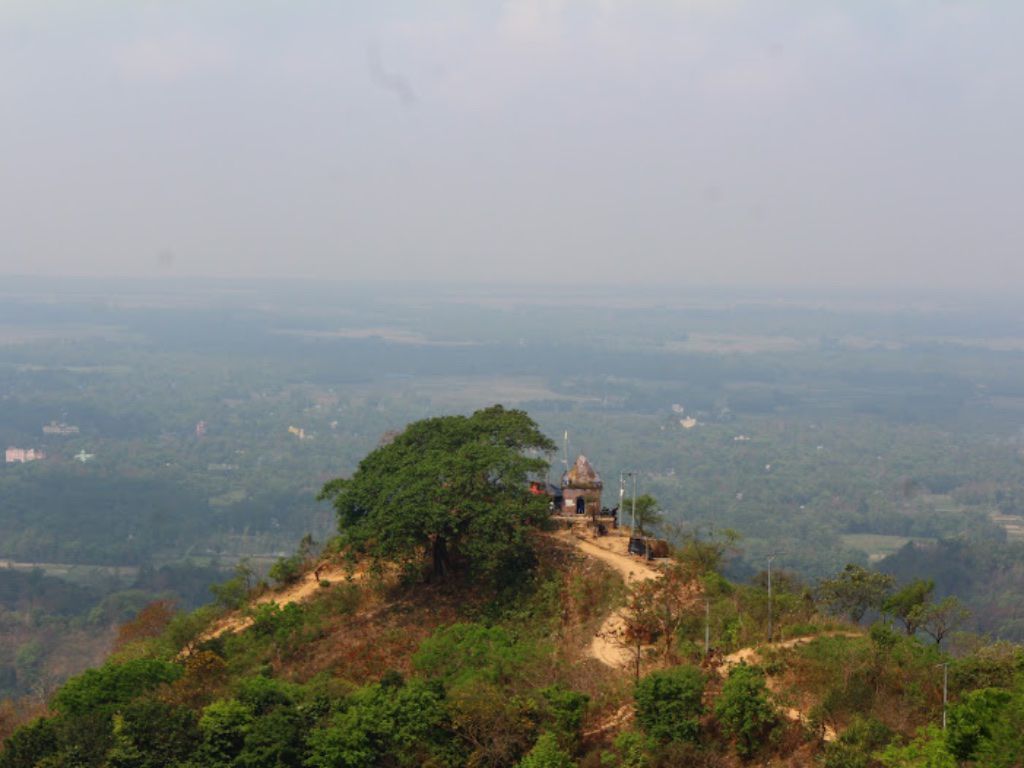
The Chandranath Temple atop Chandranath Hill near Sitakunda in Bangladesh is one of the most famous Shakti Peethas. The right hand of the Goddess is believed to have fallen at this site. The presiding deity here is Goddess Bhavani, and the guardian Bhairav is Chandrashekhar.
Shakti Peethas
Shakti Peethas are among the holiest pilgrimage sites in Hinduism. According to tradition, different parts of Goddess Dakshayani Sati’s body fell at various locations, which later became sacred Peethas. Although 51 Shakti Peethas are commonly mentioned, their exact number and locations vary across scriptures. The Peethanirnaya Tantra lists 51, while Shivcharita mentions 51 Peethas plus 26 sub-Peethas. The Kubjika Tantra refers to 42, and the Jnanarnava Tantra speaks of 50. These Peethas are spread across the Indian subcontinent, and in each Peeth, the Goddess resides alongside Bhairav.
Mythological Story
According to legend, in the Satya Yuga, King Daksha—father of Goddess Sati—held a grand yajna to take revenge on Lord Shiva. Daksha was enraged because Sati had married Shiva, a ‘yogi,’ against his wishes. He invited almost all gods and goddesses except Shiva and Sati. Despite Shiva’s reluctance, Sati attended the yajna with Shiva’s followers.
As she was not invited, she was humiliated at the ceremony. Daksha insulted Lord Shiva as well. Unable to bear her father’s disrespect toward her husband, Sati sacrificed herself through yogic fire.
Hearing this, the grief-stricken Shiva destroyed Daksha’s yajna and, carrying Sati’s lifeless body, began his cosmic dance of destruction. The universe was on the verge of collapse. The gods intervened, and Lord Vishnu used his Sudarshan Chakra to cut Sati’s body into pieces. These fragments fell at different places across the Indian subcontinent, forming the sacred Shakti Peethas.
History
According to the Sanskrit text Rajmala, around 1204 CE, King Bishwambhar Sur of the famous Adishur dynasty of Gaur attempted to visit the Chandranath Temple by river route. The poet Jayadev Goswami, author of Nigamakalptaru, is believed to have lived near Chandranath for a long time. King Dhanyamanikya of Tripura, a devoted Shaivite, used to send offerings to Chandranath Temple and even attempted to move a Shiva idol from here to his own kingdom.
The Temple and Surroundings
Sitakunda is known for its breathtaking natural beauty. It is considered a major pilgrimage site for Hindus. The Chandranath Temple stands on the highest peak of the region. Around it are many religious and cultural sites: Barabazar Puja Mandap, Kramdeshwari Kali Temple, Bholananda Giri Sevashram, Kachari Bari, Shani Temple, Premtala, Loknath Brahmachari Sevashram, Ramakrishna Sevashram, Girish Dharmashala, Dol Chattar, Nani Gopal Saha Pilgrims Inn, Mohanta Ashram, Vivekananda Smriti Panchavati, Jagannath Ashram, Sri Krishna Temple, Shankarmath and Ashram, Vishwanath Temple, Mahashmashan Bhavani Temple, Swayambhunath Temple, Gayakshetra, Jagannath Temple, Virupaksha Temple, Patalpuri, Annapurna Temple, and more. The old name of the Chandranath Temple was “Sitar Kund Temple.”
Every year, a grand festival is held here on Shivaratri or Shiv Chaturdashi. During this time, Sitakunda hosts a massive fair. Hindu residents of the area also organize a large fair in the month of Falgun (February–March). This event, known as the Shiv Chaturdashi Mela, attracts thousands of devotees and saints from Bangladesh and abroad. Nearly 1–2 million pilgrims visit the site every year.
Location on Google Maps
Source: Wikipedia
Date: 27.01.2022