As a sociologist of religion who has spent decades studying the dynamics of
persecution, identity, and minority vulnerability across continents, Dr.
Massimo Introvigne has long observed that some tragedies fade from global
memory not because they lack significance, but because the world often hesitates
to confront the fullness of their truth. The genocide in Bangladesh—
particularly the targeted violence against Hindu communities—remains one such
under-recognized chapter in modern history.
This eight-episode series seeks to illuminate those events with clarity,
balance, and scholarly responsibility. It examines not only the historical facts
of the atrocities, but also the deeper social, religious, and political forces
that shaped them. In doing so, it gives voice to survivors, acknowledges the
suffering of marginalized communities, and explores how patterns of hatred and
discrimination can evolve into systematic violence.
Dr. Introvigne expresses his hope that this work will contribute to a broader
global understanding of how religious and ethnic minorities become targets, why
early warning signs often go unnoticed, and how remembrance is essential to
preventing future abuses. For him, documenting these stories is not simply an
academic duty—it is a moral imperative.
The Bangladesh Genocide. Ep1 - In Search of “East Pakistan"
The creation of Pakistan in 1947 as a strange state consisting of two non-contiguous parts prepared the way for the genocide.
by Massimo Introvigne
Part 1 of 8
2021 marks the 50th anniversary of the Bangladesh genocide of 1971, one of the
most brutal and most forgotten pages of 20th-century history. The fact that
violence against the Hindu minority has started again in Bangladesh in October
2021 makes the anniversary even more sad and sinister.
The genocide happened in 1971, but its root causes are much older. Perhaps the
oldest is the accusation by Muslim traditionalists and fundamentalists that most
Bengali-speaking Muslims are “crypto-Hindus.” While the term technically
indicates Hindus who just pretend to be Muslims (or Christians) to avoid
discrimination and persecution, it became a slanderous word used to criticize
Sufis and others whose folk religious traditions appeared as unorthodox to
fundamentalists, and who would occasionally also visit Hindu or Sikh shrines.
Such Islam was prevalent in what is present-day Bangladesh, although the
fundamentalist Jamaat-e-Islami was also active there at the time of Partition.
In 1947, the British granted independence (although initially in the form of
dominions maintaining allegiance to the British crown) to India. They had
decided that leaving colonial India continue as a single country would lead to
civil war and carnage, giving the sectarian tensions between Hindus and Muslims.
Their solution was the Partition, i.e., creating two separated independent
dominions: India for the Hindus and Pakistan for the Muslims.
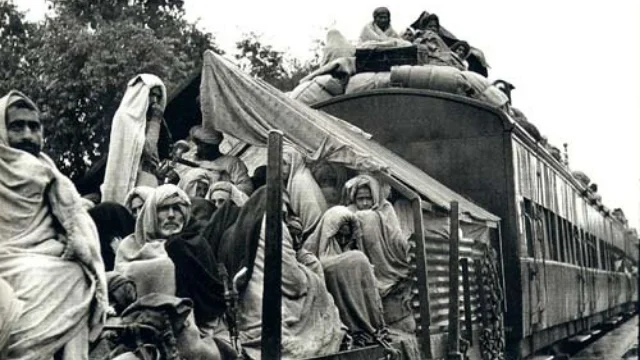
While members of other religions were expected to stay where they lived, the
Partition moved between 10 to 20 million people who did not want to remain in a
country where their religion was not prevalent. Not all moved, though, and today
there are still more than 200 million Muslims in India, at least four million
Hindus in Pakistan (but Hindus claim the official statistics are manipulated,
and they are in fact closer to 8 million), and more than 12 million Hindus in
Bangladesh.
Pakistan was formed as a strange country, which included a West Pakistan
(present-day Pakistan) and what was called East Bengal and later East Pakistan
(present-day Bangladesh) in a single state, with a single government, but
consisting of two non-contiguous parts distant some 1,700 kilometers from each
other, with India in the middle. The borders of East Pakistan had a precedent in
something also called Partition, which had occurred in 1905 when the Viceroy of
India, Lord George Curzon (1859–1925), tried to prevent sectarian violence
between Hindus and Muslims in Bengal by dividing the Bengal Presidency (later
the Bengal Province) in separated Hindu and Muslim provinces. Bengalis
protested, and in 1911 the Partition of Bengal was cancelled. However, it served
as a reference for creating East Bengal (later, East Pakistan) with the
Partition of 1947.
There were two problems with the Partition. First, it did not happen calmly and
orderly as the British had hoped. The resettlement of millions of people
generated tensions, violence, and killings. Worse still, resettlement had been
intended by the British as a voluntary choice, but some of these who did not
want to leave were attacked by mobs of a different religion, forced to flee, or
killed. In the end, although statistics are controversial, the Partition might
have costed one million deaths.
Violence also erupted in East Bengal, where hundreds of thousands of Hindus were
attacked by Muslim thugs. The religious geography of India was extremely
complicated, and the British attempt to draw straight lines for the borders left
areas that were traditionally Hindus, such as the district of Kulna in East
Bengal, to Pakistan, and areas with a Muslim majority to India.
Geographical reasons led to award to East Bengal the Chittagong Hill Tracts,
which had never been part of Bengal and had a Buddhist majority, in addition to
a significant Hindu minority. On independence day, August 15, 1947, the
Buddhists and Hindus of the Chittagong Hill Tracts took to the street with
Indian flags, persuaded they were now part of India. Only two days later, they
were told that their districts had become in fact part of Pakistan. They tried
to revolt, but the Pakistani Army occupied the Tracts. Massacres, rapes, and
extrajudicial killings followed.
A second problem, whose importance the British had under-evaluated, was that
East Pakistan was much poorer than West Pakistan. Those in the West regarded
their compatriots in the East as backward and, because of the old accusations,
“bad” Muslims. On the other hand, while in 1947 there was a substantial
demographic balance between West and East Pakistan, each with a population
around 30 million, numbers in the East grew rapidly because both of the influx
of Muslims escaping the Eastern part of India and of a higher fertility. The
larger contingent of those who moved from India to West Bengal consisted of at
least 500,000 Muslims from Bihar State. Bihari Muslims further grew because of
demography, and will become in 1971 both actors and victims of the genocide. By
1951, the population of East Pakistan, 42 million, had overcome the one of West
Pakistan, 33.7 million. Until 1971, East Pakistan continued to have a larger
population than West Pakistan.
Because of the superior organization of political parties and the economic
predominance of West Pakistan, political and military power in the newly created
Pakistan remained largely in the hands of the Westerners. Although some Bengalis
became presidents and prime ministers of Pakistan, their terms were short-lived
and they were often ousted by military coups. In the higher echelons of the
army, Easterners always remained a small minority.
This created an intractable political problem for Pakistan. Most Western
Pakistanis wanted their government democratically elected. However, since
demography meant that there were more votes in East Pakistan, where politics was
dominated by a single party, the Awami League, founded as the Awami Muslim
League in 1949 to protect the interests of the Easterners, it soon became clear
that any truly democratic election will give the absolute majority of the seats
to Awami. The result would have been that rich West Pakistan would end up being
politically dominated by poor East Pakistan. For this reasons, democratic
elections were never really held—until they did, in 1970, and triggered the
genocide.
The Bangladesh Genocide. Ep2 - The Language Riots
Eastern Pakistanis wanted Bengali acknowledged as one of Pakistan’s national language. After years of bloody repression, they won their battle in 1956.
by Massimo Introvigne
Part 2 of 8
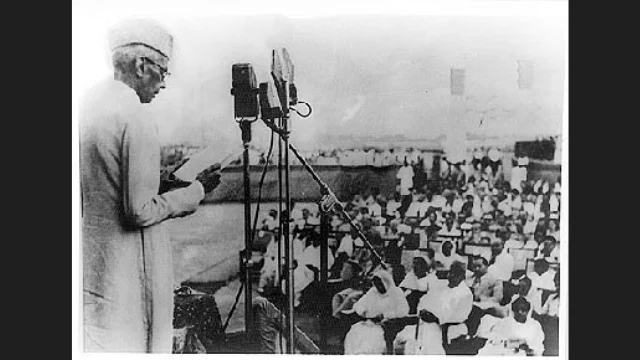
In March 1948, a few months before he died, the father of modern Pakistan,
Muhammad Ali Jinnah (1876–1948), visited East Bengal and proclaimed Urdu the
sole national language of the country. The decision had a cultural reason.
Although Pakistan had a great variety of languages, Urdu had been an element
unifying the Muslims of the Indian subcontinent since the Mughal Empire.
Indian Muslims, that is, except those in Bengal. Bengalis had a language with a
venerable literary and even religious tradition. They did not want to renounce
it, and when Muslims started to be politically active in British India, Bengalis
consistently asked that Bengali be regarded as the official language of national
Muslim organizations together with Urdu. The movement known as the Bengali
Renaissance, which flourished in the 19th century, further promoted the use of
Bengali among both Bengali-speaking Hindus and Muslims. Bengali was also the
language spoken by the majority (54%) of Pakistanis in 1947, as it dominated
East Pakistan while West Pakistan had a variety of different languages.
Yet, Jinnah decided for Urdu, which was also perceived in East Pakistan as a way
to perpetuate the economic and political subordination of the East to the West
within the new country. He chose a trip to East Pakistan to announce that no
other language than Urdu will become the country’s official language, and
attacked those who thought otherwise as a fifth column of India and even the
Soviet Union.
When Jinnah arrived in Dhaka in 1948, students at the local university were
already protesting the government’s orientation towards the imposition of Urdu
as the national language, and there had been clashes with the police. Jinnah
made his announcement on March 21 and went to University of Dhaka to explain his
decision on March 24. He barely managed to conclude his speech, with students
repeatedly interrupting him.
In the following months Jinnah, who was suffering from tuberculosis, was also
diagnosed with lung cancer. He died on September 11, 1948. Language claims were
part of the agenda of the Awami Muslim League, later Awami League, founded in
East Pakistan in 1949 and later to become the largest Pakistani political party.
Although Eastern Pakistanis had hoped that Jinnah’s successors would be more
flexible on the language question, in January 1952 the Constituent Assembly of
Pakistan reiterated that Urdu will be the only official language. Under the
leadership of the Awami League, protests erupted in Dhaka, where on February 21
five students (and perhaps more) were killed by the police. From 1999, the
United Nations celebrate on February 21 the International Mother Language Day,
remembering those who lost their lives for their language.
From February 22, protests extended to the whole East Bengal, and more were
killed, with the government blaming again India and the Soviet Union for the
unrest. On February 23, a Monument to the Martyrs was erected in Dhaka, only to
be destroyed by the police on February 26. Thousands, including leaders of the
Awami League, were arrested.
On the first anniversary of the February 21 killings, a massive demonstration
was held in Dhaka with more than 100,000 participants, and the foundation of a
memorial for the victims, the Shaheed Minar, was laid down. The February 21
event was repeated in subsequent years.
Slowly, the Bengalis won their battle. By 1954, there was a majority in the
Constituent Assembly favoring the introduction of Bengali as official language
together with the Urdu. This was achieved with the Constitution of 1956. In a
spirit of reconciliation, the government even supported the construction of the
Shaheed Minar.
The idea of a national reconciliation was, however, short-lived, although the
victory in the language campaign divided Bengali nationalists between those who
wanted separation from Pakistan and those who would have been happy with
autonomy and federalism.
The Constitution was abrogated after only two years, in 1958, after the military
coup of General Ayub Khan (1907–1974). There were voices among the Pakistani
military calling for a return to the Urdu-only regime, but they failed to
prevail. Bengali remained an official language. However, the ban of political
parties also affected the Awami League, whose leaders ended up in prison again.
In 1965, Pakistan went to a war with India originated by the question of
Kashmir. East Pakistan claimed again that its meager resources had been drained
to support the inconclusive war, its borders had not been protected, and the
power continued to remain firmly in the hands of Western Pakistanis.
In 1966, the Awami League launched the Six Point Plan, calling for a federal
Pakistan where the central government will handle only Defense and Foreign
Affairs, and all other subjects should be governed by the states. Although the
program stopped short of separation, General Ayub Khan and the new chief of the
Pakistani army, General Yahya Khan (1917–1980) reacted with virulent speeches
calling the Awami League “separatist.” On March 24, President Ayub Khan said he
was fully prepared for civil war. Eventually, it became a self-fulfilling
prophecy.
The Bangladesh Genocide. Ep3 - Cracking Down on Bengali Leaders
Between 1967 and 1969, General Ayub Khan’s regime tried to destroy the political leadership of East Pakistan. It failed, but created further unrest
by Massimo Introvigne
Part 3 of 8
In previous articles, we saw how the West Pakistan establishment faced an
intractable dilemma about East Pakistan. If promises that free elections would
be held would not be kept, there would be unrest in West Pakistan as well. On
the other hand, because of demographic developments and the fact that there were
more voters in East Pakistan, free elections might have led to Easterners
gaining the majority and governing the nation as a whole, putting an end to the
power monopoly of the Westerners.
Complicating the matter was the fact that, while in the West there were several
competing well-organized parties, in the East one party, the Awami League,
dominated local politics. The Awami League, with the name Awami Muslim League,
had been founded on June 23, 1949, when Bengali nationalists separated from the
Muslim League, the largest Pakistani party, which was dominated by Western
Pakistanis.
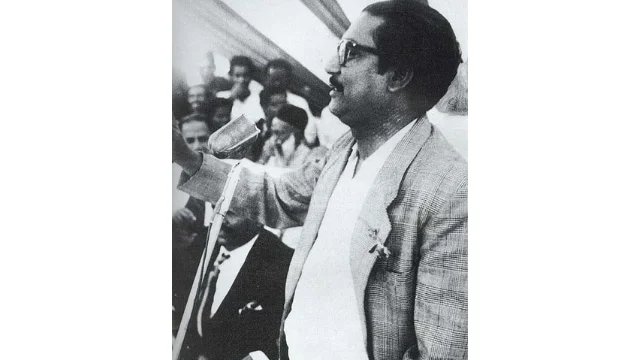
The party had three joint secretaries, but Sheikh Mujibur Rahman (1920–1975),
known to Bengalis as Mujib, emerged as its main leader. Mujib will later go on
to become the father of modern Bangladesh, and will be assassinated in 1975, a
casualty of the turbulent post-independence Bangladeshi politics. His daughter,
Sheikh Hasina, is the current Prime Minister of Bangladesh.
Mujib was one of the leaders of the movement for the Bengali language discussed
in our precedent article, and was arrested three times for this reason in 1948.
He spent another two years in prison between 1950 and 1952, accused of
separatism. In the short-lived effort at reconciliation that followed the 1952
language riots, Mujib was allowed to become a member of the East Bengal
government and of the Constituent Assembly of Pakistan.
After the coup of General Ayub Khan, Mujib was arrested again in 1962 and 1964.
He was released in 1965, and as leader of the Awami League launched in 1966 the
Six Point Plan, the proposal for an autonomous East Pakistan within a federal
Pakistan that we mentioned in the previous article.
The plan was widely popular among Bengalis, but perceived as separatism in
disguise by Western Pakistanis. As demands for national elections increased, the
Ayub Khan regimes considered that, to prevent an Awami majority, Mujib and his
party should be wiped out before elections could be held.
The tools used by Ayub Khan were the intelligence service, the police, and the
judiciary. In December 1967, Ayub Khan visited East Pakistan. Although according
to the media, and to Eastern Pakistanis, the visit went up smoothly, when he
returned back home the intelligence claimed that a plan by Bengali “separatists”
to assassinate him has been fooled at the last minute. Some sixty Bengali
political and military leaders were arrested, although evidence of an
assassination attempt was scarce. A U.S. investigation, now declassified,
concluded that no assassination attempt had taken place.
Nonetheless, the Inter-Services Intelligence (ISI), the intelligence service of
Pakistan, continued to claim that killing Ayub Khan was part of a plot to launch
an armed separatist insurrection with the help of India. It was called the
Agartala Conspiracy as the conspirators were accused to have met Indian military
officials in Agartala, in India’s Tripura state. 1,500 Bengalis were arrested,
including Mujib, although only 35 were eventually brought to trial. It was an
obvious attempt to destroy the Awami League and its leader, at a time when the
emergence in West Pakistan of the new Pakistan Peoples Party, founded by former
Ayub Khan’s minister Zulfiqar Ali Bhutto (1928–1979), was making elections
unavoidable.
The plan, however, ultimately collapsed. Although it was not impossible that
members of the Awami League might have met Indian officers, evidence that crimes
had been committed was scarce.
While the Agartala Conspiracy trial, which had started on June 19, 1968, was
continuing in Dhaka, on February 15, 1969, one of the defendants, Pakistan Air
Force Sergeant Zahurul Haq (1935–1969), was shot by a guard in the prison. As it
had happened before, students at the University of Dhaka were the first to
descend on to the streets, soon followed by tens of thousands of Bengalis in the
whole East Pakistan. In Rajsahi, in the northern part of East Pakistan, a
professor who had joined the protest, Mohammad Shamsuzzoha (1934–1969), was
killed by the police.
Protests were spiraling out of control when, on February 22, the government
announced that it was withdrawing the Agartala Conspiracy case. All the
defendants were released, and a huge crowd welcomed home Mujib, who was publicly
decorated with the title of “Bangabandhu,” “The Friend of Bengal.”
Actually, the plot to destroy the Awami League ended up in disaster for the
regime. Not only the party was not destroyed, it emerged from the 1967–69 events
reinforced.
Ayub Khan, however, was not told the truth by his intelligence service. It was
reported to him that the Awami League had been discredited and would not win the
elections, which Ayub Khan called for 1970 as the first democratic general
elections in Pakistan’s history. Ayub Khan was more easily misled because he had
suffered a heart attack and a paralysis that had put him in a wheelchair. On
March 25, 1969, he transferred his powers to General Yahya Khan (1917–1980), the
commander-in-chief of the Pakistani Army, who was probably preparing a coup.
The electoral clock Ayub Khan had set in motion was, however, ticking. There was
no longer a way of stopping it.
The Bangladesh Genocide. Ep4 - 1970, Year of Decision
Elections were postponed due to natural disasters. When they were finally held, they determined an unsolvable crisis in Pakistan.
by Massimo Introvigne
Part 4 of 8
In previous articles, we discussed the maneuvers by the government of Pakistan,
dominated by Western Pakistanis, to prevent the Awami League, which represented
the interests of East Pakistan, from winning the 1970 elections, taking
advantage of demography and the fact that there were more Eastern than Western
voters.
Efforts to destroy the Awami League failed, but the agitation in West Pakistan
in favor of the elections, led by the Socialist-oriented Pakistan Peoples Party
of Zulfikar Ali Bhutto (1928–1979), made cancelling them impossible to the
military regime, although Martial Law was still in force.
Nature, however, intervened. 1970 was a disaster year for Pakistan. First, there
were floods with thousands of casualties, which led President General Yahya Khan
(1917–1980) to announce on August 15 that the elections, scheduled for October
5, were being postponed to December 7.
It was widely suspected that this was just a move to buy time while Yahya was
searching for a way to cancel the elections altogether. However, that natural
problems were serious was confirmed by two smaller cyclones in October that
killed 16,000 in East Pakistan and by the Bhola cyclone that hit Eastern
Pakistan on November 12, 1970. It was the deadliest tropical cyclone in history,
and might well have been the deadliest modern natural disaster (statistics on
some earthquakes, which also had high casualties, are controversial). More than
500,000 Eastern Pakistanis died, entire villages were wiped out, millions lost
their homes and jobs.
Because of previous controversies, elections could not be postponed again. In
fact, the Bhola cyclone became a main theme of the elections. Relief was slow
and insufficient, and Eastern Pakistanis believed that this was one more
instance in which West Pakistan had proved it was not ready to invest resources
in favor of the poorer and politically unstable East Pakistan.
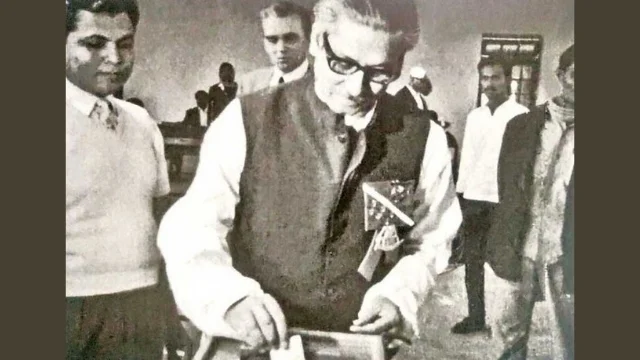
On December 7, 1970, the general elections were held, except in nine districts
in the coastal area of East Pakistan severely hit by the cyclone, which voted on
January 19, 1971. Considering the devastations of the cyclone, the turnover was
comparatively high, 63%, and as expected more Eastern Pakistanis voted than
Western Pakistanis. The results of what historians have called the fairest
elections in Pakistani history confirmed that the plan to discredit the Awami
League had not succeeded. The League won 167 seats, or all the seats in East
Pakistan except two, and the absolute majority of the 313-members Assembly.
Bhutto’s Pakistan Peoples Party was a distant second with 86 seats. Parties
representing fundamentalist Islam also won seats, including Jamaat-e-Islami.
Illusions were shattered, and the worst nightmare of the Western Pakistani
establishment materialized. If the Assembly would convene, thanks to its
absolute majority, the Awami League would form a government of its own,
governing not only East Pakistan but also West Pakistan. As mentioned in our
previous articles, in the eyes of most Western Pakistanis this was
inconceivable. Bhutto and President Yahya Khan, while disagreeing on many other
issues, were both determined to prevent the Awami League from forming a
government, and Awami leader Sheikh Mujibur Rahman (1920–1975), called Mujib by
Bengalis, from becoming Prime Minister.
On January 15, 1971, General Yahya Khan came to Dhaka to meet Mujib. He proposed
that the Assembly will convene on March 3, and that the military will let Mujib
be elected Prime Minister, while Yahya Khan should continue as President to
guarantee the rights of Western Pakistanis. Bhutto, however, disagreed. He
interpreted the Legal Framework Order (LFO) of 1970, which governed the
elections and post-election processes, to the effect that a party representing
only East Pakistan could not form a government and he, Bhutto, should become
Prime Minister as his was the largest party present in both the West and the
East.
Meetings between Mujid and Bhutto failed to solve the matter, while Yahya
postponed the Assembly’s inaugural session until Bhutto and Mujid would have
both agreed to a date.
Meanwhile, a new development further complicated the situation. In East
Pakistan, Mujid and the Awami League enjoyed widespread support, but it was not
unanimous. There were Muslim fundamentalists in East Pakistan, including members
of Jamaat-e-Islami, which considered religion more important than ethnicity or
language, and opposed Mujid regarding him as a “secular Muslim.” There were also
linguistic and ethnic minorities, which felt closer to the Western Pakistanis
than to the Bengalis.
They included a huge number, evaluated between half and one million, of Bihari
Muslims, i.e., Muslims from the Indian state of Bihar who had moved to East
Pakistan during the Partition. Most Bihari Muslims spoke Urdu as their mother
tongue, and had opposed the movement in favor of the Bengali language. Fearing
discrimination in an Awami-dominated Pakistan, they took to the streets in the
first days of March, expressing their support for the theories that Awami should
not be allowed to form a national government. Bengalis reacted, and some 300
Bihari Muslims were killed.
On March 7, Mujid announced that his was now a “struggle for independence,” but
at the same time he kept the dialogue with Yahya and Bhutto open. On March 15
and 16, Yahya was again in Dhaka discussing with Mujid how to solve the issues.
What he did not tell Mujid is that the Pakistani Army, overwhelmingly dominated
by Western Pakistanis, was already preparing a military operation where troops
from the West would enter East Pakistan, put it under military rule, and arrest
the leaders of Awami. Although nobody in East Pakistan knew it at the time, the
genocide will start only ten days after the Yahya-Mujid meetings.
The Bangladesh Genocide. Ep5 - The First Killing Fields
On March 25, 1971, the Pakistani Army launched “Operation Searchlight.” It should have been a blitzkrieg. It became a genocide.
by Massimo Introvigne
Part 5 of 8
As discussed in previous articles, the immediate cause of the Bangladesh
genocide was the victory of the Awami League, which represented the interests of
East Pakistan, in the national Pakistani political elections of December 7,
1970, where it obtained the absolute majority of the seats in the Assembly. The
Western Pakistanis had no intention of being governed by Eastern Pakistanis, and
both President General Yahya Khan (1917–1980), who was in power as head of a
military regime, and Zulfikar Ali Bhutto (1928–1979), the leader of the largest
party in West Pakistan, started negotiating with Awami leader Sheikh Mujibur
Rahman (1920–1975), called Mujib by Bengalis, trying to find a solution.
Mujib kept negotiating, but he went to his last meeting with Yahya Khan, on
March 23, 1971, after having raised the flag of independence before a cheering
crowd.
However, while negotiations were still going on in March 1971, by February the
Pakistani Army had decided to intervene and put East Pakistan under a regime of
military occupation. Riots in early March where Bengalis killed some 300
immigrants from the Indian state of Bihar, which were hostile to the Awami
League, were later cited by the Army as the reason for the intervention.
However, we now know that the decision to intervene had already been taken
before the riots involving the Biharis.
Most documents on what happened in 1971 remain classified in Pakistan but in
2000 some were declassified, including (with the omission of some enclosures)
the report of the Hamoodur Rahman Commission, created in Pakistan in December
1971 to investigate the atrocities. While the report was ridiculed
internationally for assessing the Bengali victims at 28,000 (even a figure ten
times higher would have been too low), it did reveal, together with other
documents, what the Western Pakistani establishment and the Army expected to
achieve with the intervention.
Initially, the plan of the Pakistani Army anticipated that East Pakistan will be
“pacified” in two weeks by some 30,000 soldiers from the West. The main leaders
of the Awami League, and the intellectuals supporting them, will be arrested.
Dhaka University, whose students had been the backbone of previous revolts, will
be put under military control. East Pakistan troops, which were theoretically
part of the same Pakistani Army but whose loyalty was doubted, will be disarmed.
Publications of all media, radio, and television will be suspended, and East
Pakistan will be put under a provisional military administration.
The plan, codenamed Operation Searchlight, started on March 25, 1971, after all
foreign correspondents had been expelled from East Pakistan. It should have been
concluded by April 10, but this was not to be. Mujid was captured on the first
day of the operation, and sent to West Pakistan to be detained near Faisalabad.
International protests avoided worst consequences for the Awami leader, but he
was in prison for the rest of 1971. However, the capture of Mujid alerted the
other Awami leaders, and most escaped to India or went underground.
Both university students and East Pakistan troops put up a resistance much
stronger than expected, galvanized by the announcement by the Awami League of
March 26, made on behalf of the incarcerated Mujid and broadcast from a radio in
Chittagong still under control of the Bengalis, which proclaimed the
independence of East Pakistan under the name of Bangladesh. In the same day, the
Pakistani Army had secured control of Dhaka University, a key target, but only
after killing some 400 students and professors. Hundreds of female students were
then raped.
Eastern Pakistani soldiers also resisted disarmament, and thousands were killed
in the first days of Operation Searchlight. By April 10, when theoretically the
operation should have ended, the Pakistani Army controlled Dhaka and other major
cities, although still finding resistance in Chittagong, but medium-sized cities
such as Rajshahi and Sylhet and large areas of the countryside remained under
the control of forces loyal to the Awami League.
Rather than the conclusion of the operations, April 10 saw the formation of a
provisional government of independent Bangladesh in India and the formal
institution of a Bangladeshi army, the Mukti Bahini. Ironically, the provisional
government was established in Agartala, the very place where, as discussed in a
previous article, where according to the Western Pakistani authorities the Awami
League had started a conspiracy to overthrow the government, although it took
oath on April 17 in Eastern Pakistani soil, in Baidyanathtala (renamed
Mujibnagar after independence in honor of Mujib).
The reaction of (West) Pakistan was escalation. More troops were sent,
eventually approaching the number of 100,000, and an ill-fated decision was
taken to arm militias of Eastern Pakistanis hostile to the Awami League. They
were either Bihari Muslims or Islamic fundamentalists, including members of the
Jamaat-e-Islami. These militias will become responsible of some of the worst
atrocities in the following months, and retaliation against them after the
independence will lead to the killing by Bangladeshis of thousands of Biharis
and members of the Jamaat-e-Islami.
Arming the militias was part of a new program, a war of extermination aimed at
killing entire parts of the East Pakistan’s population. We will discuss how the
genocide developed in the next article of the series.
The Bangladesh Genocide. Ep6 - A Killing Frenzy
In a few months, up to three million Bengalis were killed. Yes, it was a genocide.
by Massimo Introvigne
Part 6 of 8
In the previous articles, we saw how the attempt by the Western Pakistani
establishment to prevent the Eastern Pakistani party Awami League, who had won
the 1970 national elections with an absolute majority, to form a government led
in March 1971 to a military expedition against East Pakistan, which in turn
proclaimed independence as Bangladesh.
Since resistance was stronger and more effective than expected, West Pakistan
sent more troops and armed local collaborator militias. From the documents that
have surfaced in the fifty years after the events, we know that the (Western)
Pakistani Army after April decided that whole segments of East Pakistan’s
populations should be physically eliminated. They were the East Bengal officers,
soldiers, and police officers who had not accepted to cooperate with the
Pakistani Army; the leaders and members of the Awami League party; the students
and professors in Bengali-language universities, together with artists and other
intellectuals; and the male Hindus, while Hindu women were raped, forced into
prostitution, or forcibly married to Western Pakistani soldiers and
collaborators.
We will return to the Hindus in the next article, not without mentioning that
Christians were targeted too. For example, in the village of Rangamatia, which
was predominantly Catholic, 90% of the houses were burned, and 14 devotees were
killed. The church was looted, as were Catholic and Protestant churches in other
parts of East Pakistan.
The other categories consisted of Muslims, and what happened in 1971 was largely
a massacre where Muslims killed other Muslims, although many Western Pakistanis
believed that Islam in the East was tainted by elements of superstition and
syncretism. Pakistani media claimed that only “insurgents” and “separatists”
were targeted, however, as the civil war progressed, all able-bodied Bengali men
were considered as potential insurgents.
Also regarded as rebels were those who tried to escape to India, although many
had taken no political sides and only wanted to flee the horrors of the war.
Perhaps the single worst massacre was perpetrated in Chuknagar, where some
10,000 refugees were gathered in May 1971 preparing to go to India. On May 10,
all were killed, including women and children.
The establishment in West Pakistan remembered that the Bengali identity and
language had been powerfully promoted by intellectuals and artists. They were
systematically hunted and killed. Novelists, playwrights, journalists,
musicians, and visual artists were slaughtered en masse, but the killings
extended to professors of science, law, economics, and medicine. Even when they
understood the war was lost, Western Pakistanis soldiers and collaborators
continued to kill intellectuals, believing this would deprive the future
independent Bangladesh of its cultural leaders. College students, who had been
crucial for the movement promoting Bengali language, were also systematically
killed.
The victims of the genocide were overwhelmingly males, and some historians call
what happened a “gendercide” targeting men rather than women. This does not mean
that women did not suffer. Between 200,000 and 400,000 Bengali women were raped.
To their shame, fundamentalist Muslim scholars in West Pakistan declared that
the “insurgent” women were a “war booty” for the Western Pakistani soldiers and
their collaborators.
International observers who entered East Pakistan in the last months of the war
confirmed that thousands of women had been taken to “military brothels” and
forced into prostitution. Others were forced to marry soldiers from West
Pakistan or collaborators. At the end of the war, many of them were pregnant, as
the same Islamic scholars had suggested that after being impregnated by “good”
Muslims they would produce a generation of better believers. Bangladeshi called
them “birangona,” “brave women,” and celebrated them as patriotic heroines, in
an effort to avoid the stigmatization raped women might have faced in local
culture.
The now declassified reports from U.S. sources started using in mid-1971 the
words “selective genocide,” although later they simply mentioned a “genocide.”
Still today, there are those who deny that it was a genocide, because it was
never the intention of West Pakistan to kill the whole Bengali-speaking
population, and “only” some specific categories were targeted. However, these
categories were a significant segment of the Eastern Pakistani population, and
the scale of the killings fully justifies the label of “genocide” according to
current standards.
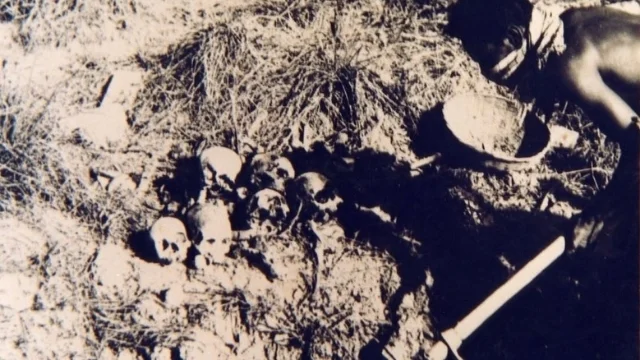
How many were killed? The first answer is that nobody knows. Mass graves
continue to be discovered in the 21st century in places for which no records of
massacres exist. In contemporary Bangladesh, the number of three million has
become a standard reference and part of the national narrative about the
nation’s birth. It may be exaggerated, just as the (Western) Pakistan’s official
count of 26,000 was, as we mentioned in a previous article, ridiculously low.
Immediately after the war, CIA reports assessed Bengali victims at 200,000. The
number is still repeated today, but it was before scholars produced demographic
studies and more mass graves were unearthed. American professor Rudolph Joseph
Rummel (1932–2014), a leading scholar of genocides, estimated the victims at 1.5
million.
Equally controversial is how many Bihari Muslims, i.e., Urdu-speaking immigrants
from the Indian state of Bihar, were killed by Bengalis during and after the
war, after they had sided with West Pakistan and formed one of the most
ferocious anti-Bengali militias. Here again, there are mythical numbers: 500,000
victims according to Bihari sources, which seems demographically impossible, and
1,000 according to the first Bangladeshi accounts. Scholars long assessed the
figure at 20,000, until Rummel suggested they may have been as many as 150,000.
More precise, although in turn not uncontroversial, figures are available for
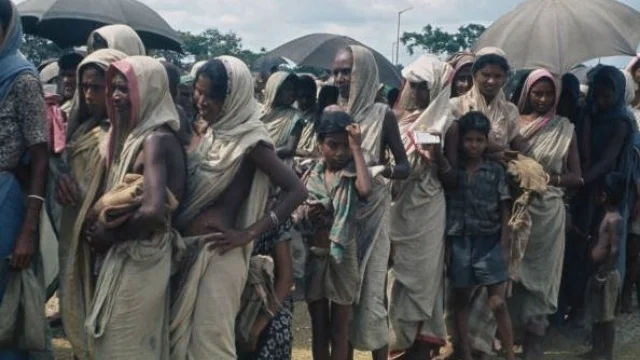
those who escaped to India and asked to be identified as refugees. They were
around six millions in mid-1971, and eight millions after the war ended. One
million and a half decided to remain in India, the others returned to Bangladesh
after independence. It was largely because of the refugees that the world took
notice of the genocide.
The Bangladesh Genocide. Ep7 - Eradicating Hinduism
One of the goals of the West Pakistanis and their collaborators in 1971 was to exterminate the Hindu community by killing all males.
by Massimo Introvigne
Part 7 of 8
The movement for having the Bengali language recognized as an official language
of Pakistan together with Urdu, and for autonomy and later independence of East
Pakistan as Bangladesh was largely led by Bengali-speaking Muslims. Yet, in the
1971 genocide, no community was targeted more mercilessly than the Hindus.
Western Pakistanis continued to slaughter Hindus even after some of their
generals had admonished that this would eventually trigger what (West) Pakistan
had tried in all possible ways to avoid, an Indian military intervention.
It was not a simple mistake. The roots of the ideology considering the Eastern
Pakistanis “inferior” or “bad” Muslim was, as we saw in previous articles, the
accusation that they were “crypto-Hindus,” and had included in their religious
practices Hindu elements that had tainted their faith.
This was due, it was argued, to the cultural influence of Hindus, and to the
fact that Eastern Pakistani Muslims were both “unorthodox” and “secular,” in the
sense that they did not have strong feelings causing a rigid separation with the
Hindus. Reforming Bengali-speaking followers of Islam into “good” Muslims
required the elimination of the Hindus.
Even the Western Pakistani generals were aware of the fact that it was
impossible to kill all the Hindus who lived in East Pakistan, who were more than
nine million. This was, however, not necessary. It was believed that after a
percentage would have been killed, the others would flee to India.
The argument was correct, as in fact two third of the eight million refugees who
escaped East Pakistan were Hindus. What the Western Pakistanis did not consider
was that, faced with such an enormous influx of refugees, even the Indian
politicians most reluctant to go to war would conclude that an armed conflict
was an easier solution than accommodating in India the whole Hindu population of
East Pakistan.
A disproportionate number of Hindus, however, were killed in 1971. In that year,
Hindus were some 20% of the East Pakistan’s population, yet it was estimated
that they might have been 50% of those killed. American leading scholar of
genocides Rudolph Joseph Rummel (1932–2014), whose statistics we mentioned in
the previous article, wrote that in the eyes of Western Pakistanis and their
fundamentalist Muslim collaborators “the Hindus among the Bengalis were as Jews
to the Nazis: scum and vermin that should best be exterminated.”
The parallel with the Nazi persecution of Jews is made even more appropriate by
the fact that the Western Pakistani army compelled Hindus to have a yellow “H”
painted on their homes, thus designating those who lived there as targets for
extermination.
The (Western) Pakistani Army took pride in not killing Hindu women, only men,
although when columns of refugees en route to India were attacked, as it
happened in the Chuknagar massacre mentioned in the previous article of this
series, women and children were killed as well. In addition to the 10,000
victims at Chuknagar, this also happened in Jathibhanga on April 23, 1971, when
some 3,000 Hindu refugees were slaughtered.
In the very first days of the genocide, Western Pakistani troops entered the
Shankharibazar area of Old Dhaka, where the Shankaris, Hindu jewelers
specialized in producing conch shell bangles, lived, and went into a killing
frenzy slaughtering more than 200 men, women, and children. Hindu women,
however, in most cases were not killed but massively raped, forced into
prostitution, or forcibly married to Western Pakistani soldiers and local
collaborator militiamen, just as it happened to their Muslim Bengali
counterparts.
How many Hindus were killed, and how many Hindu women were raped, depend on the
general statistics of the genocide, a matter of controversy. 100,000 Hindu women
raped and 700,000 Hindu men killed appear as a reasonable estimate, although the
precise numbers will probably never be known.
Other casualties of the genocide included Hindu temples and libraries that were
assaulted and looted, leading to the irreparable loss of ancient cultural
treasures. One infamous example was the demolition of the Ramna Kali Mandir, a
Kali temple in Dhaka that dated back to the Mughal Empire. The ashram of the
Hindu saint Anandamayi Ma (1896–1982), who was within the temple’s premises, was
also destroyed. 85 Hindus were killed in the attack.
After the war ended and the independence was proclaimed, the majority of the
refugees returned to Bangladesh. They were encouraged by proclamations that,
while Islam was the official religion, the state will be secular, religious
liberty will be respected, and the fundamentalist Muslim organizations that had
sided with West Pakistan in the war will be banned.
Their hopes were short-lived. Sheikh Mujibur Rahman (1920–1975), the father of
independent Bangladesh, believed in the possibility of a “secular Islam.”
However, he was assassinated in 1975, and gradually Islamic fundamentalism
reasserted itself as an important component of Bangladeshi politics and culture.
Although the current Prime Minister, Sheikh Hasina, is Mujibur’s daughter, she
has to mediate between different forces. The escalation of violence against
Hindus in Bangladesh in October 2021 proves that the consequences of the
genocide are still at work in Bangladeshi society.
The Bangladesh Genocide. Ep8 - The World Protests, India Intervenes
International awareness of the mass killings created the conditions for Indian intervention and the end of the war.
by Massimo Introvigne
Part 8 of 8
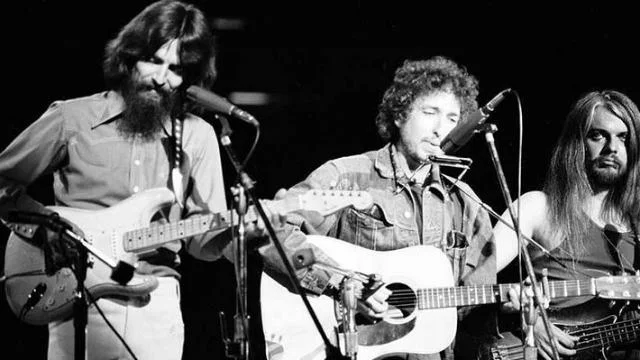
For those of my generation, “Bangla Desh” was first a song by George Harrison
(1943–2001) and a concert at New York’s Madison Square Garden organized in 1971
by the same Harrison and his Indian friend Ravi Shankar (1920–2012), featuring
such rock luminaries as Bob Dylan, Ringo Starr, and Eric Clapton. Harrison was
one of the two key figures who created in 1971 a global awareness of Bangladesh
as a humanitarian catastrophe. The other was Anthony Mascarenhas (1928–1986). We
all remember Harrison, and few remember Mascarenhas. However, without
Mascarenhas, there might not have been Harrison’s concert, and history might
have been different.
Mascarenhas was a Catholic from Goa whose family had moved to Karachi when he
was a child. He was a journalist who became assistant editor of Karachi’s
Morning News. He was sent to East Pakistan to cover the “pacification” of the
region. A few days there were enough for him to come to two conclusions. First,
the (Western) Pakistani troops were perpetrating a genocide. Second, neither the
Morning News nor any other Pakistani newspaper would publish his articles if
he would tell the truth.
He asked his wife, who was in Karachi, to book a ticket and go to London with
their children as soon as possible. Then, he contacted the London Sunday Times
and proposed an article on what was going on in East Pakistan. The article was
published on June 13, 1981. It had a simple title, “Genocide.”
Indian Prime Minister Indira Gandhi (1917–1984) later stated that it was
Mascarenhas’ article that persuaded her that India should intervene in East
Pakistan, and led her to “a campaign of personal diplomacy in the European
capitals and Moscow to prepare the ground for India’s armed intervention.” By
that time, Mascarenhas himself was safely in London, where he will have a long
and distinguished career as a Sunday Times journalist.
Indira Gandhi mentioned Europe and Russia but not United States and China. The
latter countries regarded Pakistan as a strategic regional ally, and a necessary
balance against Indira’s cooperation with the Soviet Union. Despite the fact
that American diplomats had alerted them about the genocide, President Richard
Nixon (1913–1994) and his national security advisor Henry Kissinger were not
prepared to give India even a silent green light to intervene, threatening on
the contrary to support Pakistan.
Nixon and Kissinger believed that the American public opinion did not
particularly care about East Pakistan. But as soon as Mascarenhas’ indictment of
the (West) Pakistanis was published, Ravi Shankar, a musician who was himself
from a Bengali family, went to see George Harrison and showed him the article.
Although the event focused on the victims and the refugees more than accusing
the perpetrators, who was responsible for the killings was clear.
The concert was held on August 1, and did not change only the history of rock
music, of which it was one of the most memorable pages. On August 17, Senator
Ted Kennedy (1932–2009), who was sensitive to the protests of his American Hindu
constituents in Massachusetts, launched a virulent attack on the U.S.
administration’s “support for a genocide,” which made the front pages of the
main American newspapers.
Of course, the concert alone might not have changed the attitude of American
media and public opinion, but the influence of popular culture should not be
under-estimated either. Most American media felt the need to explain to those
who had followed the concert what “the Bangladesh crisis” was all about, and
published grim reportages about the killings. Although Kissinger, in particular,
still wanted to protect Pakistan, by Fall it was clear that any military attempt
by the U.S. to prevent India from entering East Pakistan would have been
extremely unpopular with U.S. voters.
Historians debate whether India could have intervened before, thus saving
hundreds of thousands of lives, since while the Indian government was
considering its options, the genocide continued. In fact, we know from the
journals of some of those involved that Indira Gandhi would have started war as
early as April, but was told by her generals that it was not wise to attack in
the monsoon season, and the army needed some months to prepare. Meanwhile, the
Indian Army offered weapons, training, and logistic support to the Mukti Bahini,
the militia of the Bangladesh independentists.
In November, preparations to strike were nearly completed on the Indian side,
but there were still concerns about the United States’ position. In West
Pakistan, crowds were gathering calling for a jihad against India that would
have also settled the question of Kashmir.
Then, on December 3, Pakistan made a fatal mistake, the same Japan had committed
thirty years before, in 1941, when it attacked the U.S. Navy at Pearl Harbor. At
5:40 p.m. the Pakistani Air Force launched “Operation Chengiz Khan,” whose
objective was to destroy the Indian Air Force through a preemptive strike.
Eleven Indian air bases were attacked simultaneously, while Pakistani artillery
opened fire in Kashmir. Rather than by Pearl Harbor, Pakistanis later said they
had been inspired by Israel’s Operation Focus, when the Israelis had destroyed
the Egyptian Air Force at the start of the Six-Day War four years before,
in 1967. However, Pakistan did not have an air force comparable to Israel’s.
Some of the bombs they dropped dated back to World War II and did not even
explode, and their planes had limited combat capabilities. In the end, only a
few Indian aircrafts were damaged.
However, Operation Chengiz Khan was clearly an act of war, and it was easy for
Indira Gandhi to tell the world that India had been attacked by Pakistan and was
entitled to react. While the Indian Air Force attacked Pakistani bases in West
Pakistan, the Indian Army, who had already entered East Pakistan to support the
Mukti Bahini, launched a blitzkrieg that crushed the Western Pakistani troops
and their allies in less than two weeks, while the Indian Navy blockaded East
Pakistan by sea. Dhaka fell to the Indian Army and the Mukti Bahini on
December 15. The following day, Major General Amir Abdullah Khan Niazi
(1915–2004), the commander of Pakistani troops in East Pakistan, signed the
Instrument of Surrender to Indian Lieutenant General Jagjit Singh Aurora
(1916–2005).
There were calls in India to continue the war against West Pakistan, but on
December 11 the U.S. aircraft carrier USS Enterprise, which had nuclear
capabilities, had appeared in the Bay of Bengal. The Soviet Union, which
supported India, answered by sending ships armed with nuclear missiles and a
nuclear submarine. China, reportedly encouraged by the United States, moved
troops to the Indian border, but they did not cross it and the Indian Army had
in turn deployed eight divisions at the border with China, ready to fight.
Nobody, however, really wanted to start a world war for Bangladesh, nor did
Indira Gandhi really want to continue the war. On July 2, 1972, a peace treaty
was signed in Simla, where Pakistan recognized the independence of Bangladesh.
It was the end of the war and the genocide, yet there were aftermaths.
Lamentably, entire ethnic groups such as the Bihari Muslims, which had supported
Pakistan in the war, were persecuted in Bangladesh, with tens of thousands
killed. Several collaborators were executed. However, the Pakistani politicians
and officers most responsible for the genocide were never brought to justice.
A legacy of hatred remained, and explosions of sectarian violence in Bangladesh,
where Muslim fundamentalists target the Hindu minority, have continued to this
day. One contribution to understanding and confronting the situation in
Bangladesh is spreading knowledge of what happened in 1971. This has been the
purpose of our series.